
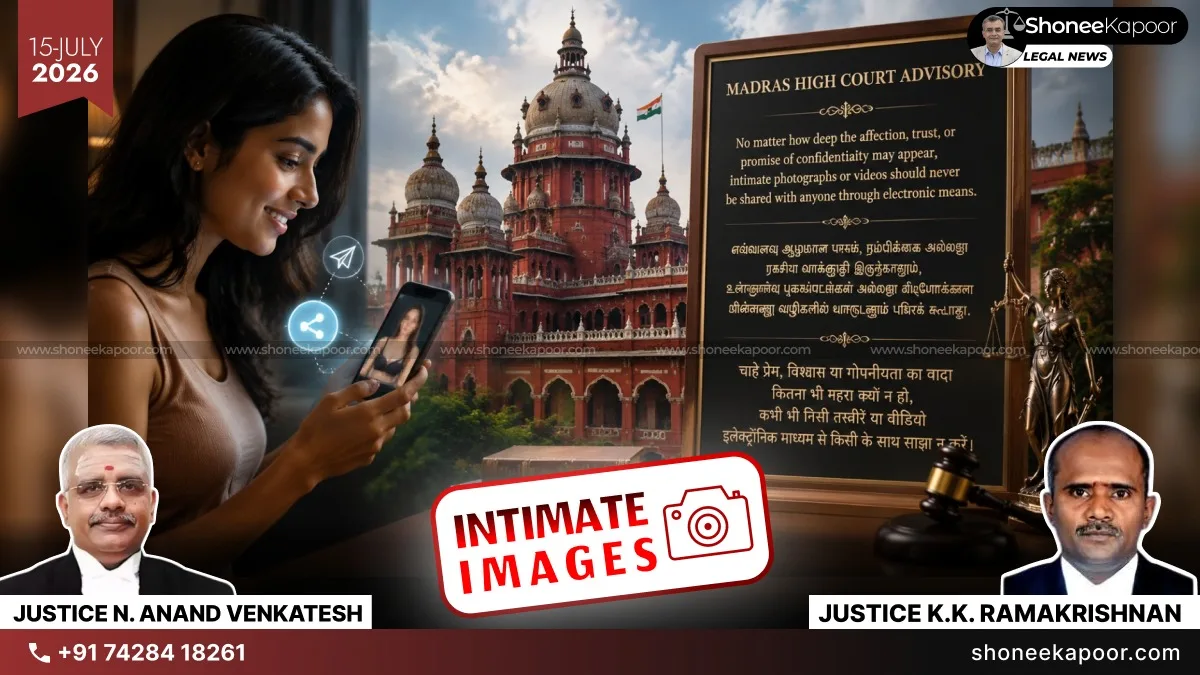
Can sharing intimate photos online put privacy at risk? Madras HC highlighted the growing danger of technology-enabled exploitation and urged young women to exercise caution before sharing personal content through electronic platforms.
MADURAI: The Madras High Court has issued an important advisory warning for women and young girls against sharing intimate photographs and videos through electronic platforms, even within relationships based on trust, affection or promises of confidentiality.
A Bench of Justice N. Anand Venkatesh and Justice K. Ramakrishnan observed that the increasing use of social media and digital communication has created new risks where private content can be misused for exploitation, threats and blackmail.
The Court highlighted that many cases involving online relationships begin with emotional trust but later turn into situations where intimate content becomes a tool for harassment and exploitation.
The Bench made a strong appeal:
“No matter how deep the affection, trust, or promise of confidentiality may appear, intimate photographs or videos should never be shared with anyone through electronic means.”
The Court further observed:
“Regrettably, in the present digital era, some unscrupulous individuals exploit the trust and emotional vulnerability of young girls and women…”
The advisory was issued in English, Tamil and Hindi so that the message could reach a wider audience. The Court also requested print, electronic and digital media platforms to spread awareness about the dangers of technology-enabled exploitation.
The Court explained that once intimate images or videos are shared electronically, the person who shared them may lose control over how they are stored, copied or circulated. A moment of trust can potentially create long-term consequences affecting privacy, dignity and mental well-being.
While deciding the case, the Court also discussed the broader issue of online deception, emotional manipulation and misuse of digital platforms in relationships. It observed that courts must examine the complete circumstances surrounding a relationship instead of only looking at the existence of intimacy.
The judgment serves as a cautionary message about digital privacy and highlights that personal images and videos shared online can become a serious risk when trust is misused. It also underlines the need for awareness, vigilance and timely action in cases involving online exploitation.
EXPLANATORY TABLE: LAWS AND SECTIONS INVOLVED
| Law/Section | Purpose | Application In This Case |
| Section 376(2)(n), Indian Penal Code (IPC) | Punishes repeated sexual acts committed against the same woman without lawful consent. | The Court held that the prosecution proved repeated acts and upheld conviction under this provision. |
| Section 417 IPC (Cheating) | Punishes dishonest deception causing wrongful loss or inducement. | Allegation involved deception through false assurances of marriage and employment. |
| Section 354(A) IPC | Deals with sexual harassment. | Trial Court had convicted the accused under this provision based on allegations of sexual misconduct. |
| Section 354(C) IPC | Deals with voyeurism, including capturing or sharing private images without consent. | Alleged recording and misuse of intimate photographs/videos formed part of prosecution evidence. |
| Section 506(II) IPC | Punishes criminal intimidation involving serious threats. | Prosecution alleged threats were used to intimidate the victim. |
| Section 294(b) IPC | Punishes obscene acts or words in public places. | One of the charges considered by the Trial Court. |
| Section 66E, Information Technology Act, 2000 | Punishes violation of privacy by capturing/transmitting private images. | Electronic material and alleged misuse of private content were examined. |
| Section 114A, Indian Evidence Act, 1872 | Creates presumption regarding absence of consent in certain rape prosecutions when conditions are fulfilled. | High Court discussed its application after accepting the victim’s testimony regarding lack of consent. |
| Section 374(2), Criminal Procedure Code (CrPC) | Provides right to appeal against conviction by Sessions Court. | The accused filed the criminal appeal under this provision. |
| Section 207 CrPC | Requires supply of prosecution documents to accused. | Trial procedure followed this requirement before framing charges. |
| Section 313 CrPC | Allows accused to explain circumstances appearing against him. | The accused denied allegations during examination under this provision. |
| Section 27, Indian Evidence Act | Relates to discovery of facts based on information provided by accused. | Court discussed recovery and discovery evidence connected with investigation. |
CASE DETAILS
- Case Title: Suji @ Kasi Vs. The State Rep. By Inspector of Police, CBCID, Nagercoil
- Case Number: Crl.A(MD).No.644 of 2023
- Court: Madurai Bench of Madras High Court
- Date Of Judgment:14.07.2026
- Bench: Justice N. Anand Venkatesh | Justice K. Ramakrishnan
- Counsels:
- For Appellant: Mr. V. Kathirvelu, Senior Counsel
- For Respondent: Mr. G. Karuppasamy Pandian, Counsel for State of Tamil Nadu
KEY TAKEAWAYS
- A private relationship can become a legal battle overnight when intimate content is misused, making both privacy and consent extremely important.
- False assumptions, emotional conflicts and misuse of private material can put an accused man’s reputation, career and future at serious risk.
- Criminal allegations arising from relationships must be decided through evidence and due process, not only based on accusations or emotions.
- Digital privacy is a responsibility of both individuals, as sharing intimate content can create serious legal consequences when trust breaks down.
- Laws must protect genuine victims of digital exploitation while also ensuring that innocent men are not punished through false or unverified allegations.
This Could Change Your Case-Get FREE Legal Advice-Click Here!
Disclaimer: The views and opinions expressed in this article are those of the Indian courts and do not necessarily reflect the official policy or position of “ShoneeKapoor.com” or its affiliates. This article is intended for informational and educational purposes only. The content provided is not legal advice, and viewers should not act upon this information without seeking professional counsel. Viewer discretion is advised.
