
A Delhi court refused interim maintenance to a working woman earning over ₹60,000 per month, despite her husband’s higher salary. The ruling raises an important question: Is maintenance a right, or should financial independence matter too?
NEW DELHI: A Delhi Court, through Additional Sessions Judge Bhupinder Singh, refused to grant interim maintenance to a woman earning more than ₹60,000 per month, holding that maintenance cannot be claimed automatically merely because the husband earns more. At the same time, the court upheld the maintenance awarded to the couple’s minor daughter and dismissed the husband’s challenge against it.
The matter came before the court through cross-appeals filed by both spouses. The wife sought interim maintenance for herself, arguing that her husband was earning more than ₹1 lakh per month and was therefore financially capable of supporting her. On the other hand, the husband challenged the maintenance awarded to their daughter, claiming that the amount was excessive considering the mother’s own income.
After examining the facts, the court found that the wife was educated, employed, and earning a stable monthly income exceeding ₹60,000. The court observed that the purpose of maintenance is to provide financial support to a spouse who is unable to maintain herself and not to create an automatic right whenever one spouse earns more than the other.
While rejecting the wife’s claim, the court made it clear that interim maintenance cannot be granted solely on the basis of a difference in income between spouses. The judge noted that the woman was financially independent and capable of supporting herself. In view of her regular earnings, the court found no justification to direct the husband to pay interim maintenance for her personal expenses.
The husband, however, also challenged the maintenance awarded to their minor daughter. He argued that the amount fixed by the trial court was disproportionate and that the mother’s income had not been properly considered while determining the child’s maintenance.
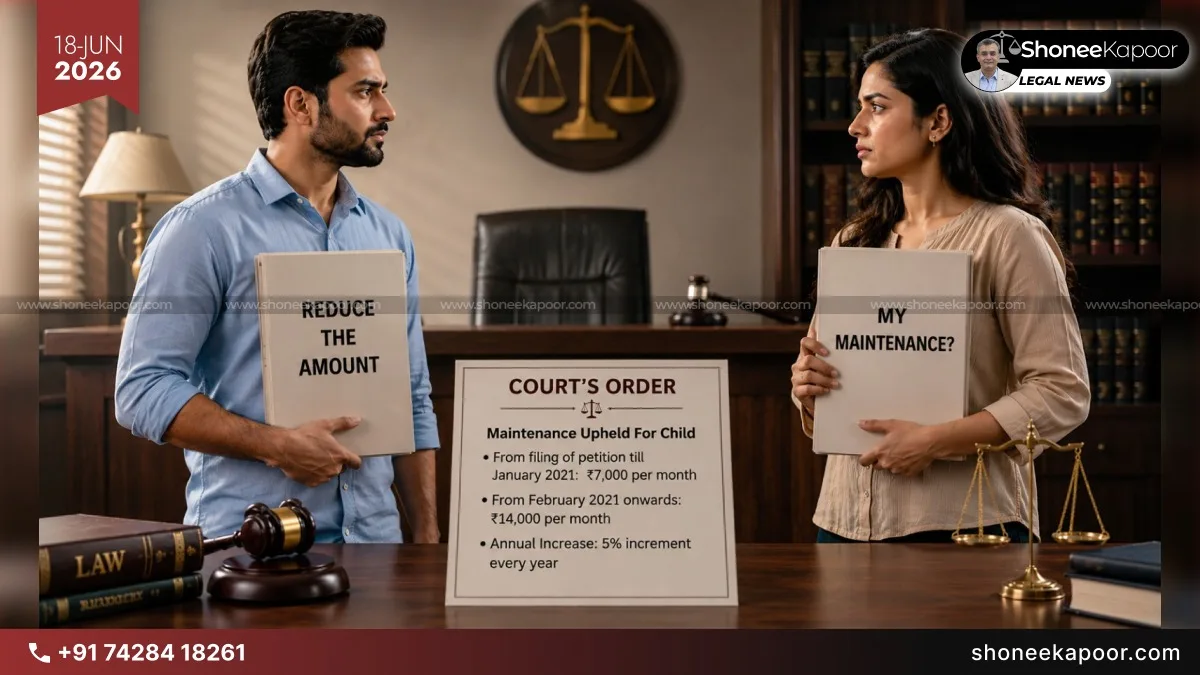
The dispute arose from an earlier order directing the husband to pay ₹7,000 per month towards the child’s maintenance from the date of filing of the petition until January 2021. From February 2021 onwards, the amount was increased to ₹14,000 per month along with an annual increase of 5% until final disposal of the case.
The husband contended that since the mother was earning a substantial income, the amount awarded for the child should be reduced. He also argued that the maintenance amount should be deposited in fixed deposits or savings accounts for the child’s future rather than being spent on a regular basis.
The court rejected this argument and emphasized the true purpose of child maintenance. The judge observed:
“Maintenance is intended to meet the present and recurring needs of the child.”
The court further stated that if the entire maintenance amount were diverted into investments instead of being used for the child’s daily requirements, it would “defeat the very purpose” for which maintenance is awarded.
The judge explained that the needs of a growing child go far beyond school fees and include food, clothing, healthcare, transportation, recreation, and several other day-to-day expenses. These expenses require continuous financial support and cannot be postponed for future benefits alone.
The court also recognized the contribution made by the parent who has custody of the child. It observed:
“The custodial parent already contributes through continuous care and supervision.”
Another argument raised by the husband was that the mother had allegedly denied him access to the child and therefore should not be trusted with handling the maintenance amount. The court rejected this contention as well.
The judge held that disputes relating to custody, visitation rights, or access to the child are separate issues and cannot be linked to the child’s right to receive maintenance. The welfare and financial needs of the child must remain protected regardless of disagreements between the parents.
After considering all submissions, the court dismissed both appeals. It refused the wife’s request for interim maintenance, holding that she was financially self-sufficient, and simultaneously upheld the maintenance awarded to the minor daughter.
EXPLANATORY TABLE: LAWS AND PROVISIONS INVOLVED
| Law / Provision | Purpose | How It Applied In This Case |
| Protection of Women from Domestic Violence Act, 2005 (Interim Maintenance Proceedings) | Allows a wife and child to seek maintenance during pending proceedings | The wife sought interim maintenance for herself and maintenance for the minor child was already granted. |
| Section 20, Domestic Violence Act | Monetary relief including maintenance for aggrieved woman and children | The court examined whether the wife was financially dependent and whether maintenance was necessary. |
| Section 23, Domestic Violence Act | Power to grant interim and ex-parte relief | The court considered the wife’s request for interim maintenance but declined it due to her sufficient income. |
| Welfare Principle for Minor Children | Child’s welfare is the primary consideration in maintenance matters | The court upheld maintenance awarded to the minor daughter. |
| Maintenance Jurisprudence Developed By Courts | Maintenance is based on need, dependency and financial circumstances | The court held that maintenance is not an automatic entitlement merely because the husband earns more. |
| Child Support Principles | Child’s maintenance covers present needs and daily expenses | The court refused the father’s request to divert maintenance into fixed deposits. |
| Best Interest of Child Doctrine | Ensures child’s welfare remains paramount | The child’s right to maintenance was protected irrespective of disputes between parents. |
CASE DETAILS
- Case Title: ABC Vs XYZ
- Court: Delhi Sessions Court
- Judge: Sh. Bhupinder Singh (Additional Sessions Judge, Delhi)
- Nature of Proceedings: Cross Appeals arising out of an interim maintenance order.
- Maintenance Upheld For Child
- From filing of petition till January 2021: ₹7,000 per month
- From February 2021 onwards: ₹14,000 per month
- Annual Increase: 5% increment every year
KEY TAKEAWAYS
- Financial responsibility should be based on actual need, not assumptions about gender.
- Being married should not automatically create a lifelong financial obligation on one partner.
- Every able-bodied adult should be encouraged to contribute towards their own financial independence.
- A child’s welfare deserves priority and should never become a bargaining tool in parental disputes.
- Fairness in family law requires looking at facts, income, and responsibilities on both sides equally.
This Could Change Your Case-Get FREE Legal Advice-Click Here!
Disclaimer: The views and opinions expressed in this article are those of the Indian courts and do not necessarily reflect the official policy or position of “ShoneeKapoor.com” or its affiliates. This article is intended for informational and educational purposes only. The content provided is not legal advice, and viewers should not act upon this information without seeking professional counsel. Viewer discretion is advised.
