
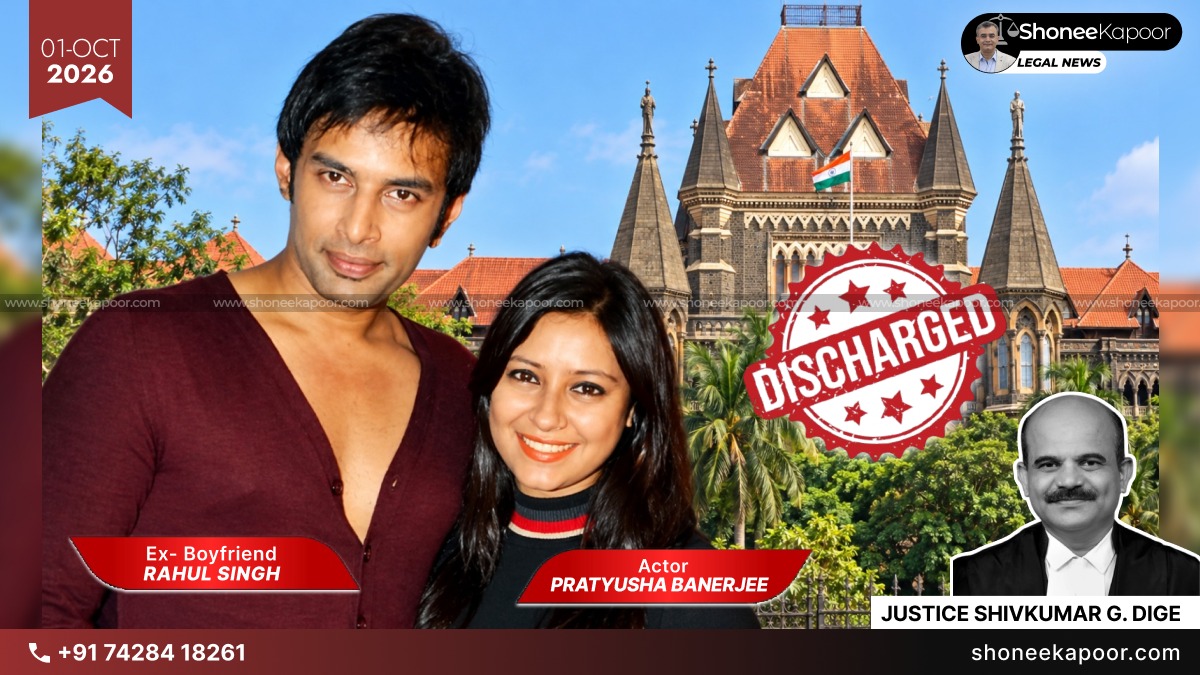
Pratyusha Banerjee Suicide Case: Bombay High Court Discharges ‘Balika Vadhu’ Fame Actress’s Ex-Boyfriend Rahul Singh After 10 Years In Abetment Case

Curated by NEWS DESK
Editorial DeskMUMBAI: The Bombay High Court has discharged actor-producer Rahul Raj Singh from the case alleging abetment of suicide of television actor Pratyusha Banerjee, bringing him major relief after nearly 10 years of criminal proceedings.
Pratyusha Banerjee, known for playing Anandi in Balika Vadhu, died by suicide at her rented flat in Goregaon, Mumbai, on 1 April 2016. Rahul, who was her boyfriend and live-in partner at the time, found her and took her to hospital, where she was declared dead.
Following a complaint by Pratyusha’s parents, Rahul was booked for abetment of suicide, assault and criminal intimidation. Her parents had accused him of physical, emotional and financial harassment. Rahul denied the allegations.
The Bombay High Court granted him anticipatory bail in July 2016. After Bangur Nagar Police filed a chargesheet in 2018, Rahul approached the Sessions Court seeking discharge. The Sessions Court rejected his plea in August 2023, after which he moved the High Court.
While rejecting his discharge plea, the Sessions Court had observed:
“This being a matter of delicate analysis of human behaviour, each case is required to be examined on its own facts, while taking note of all the surrounding factors having bearing on the actions and psyche of the accused and the deceased,”
The Sessions Court had also observed, on the material before it, that witness statements prima facie suggested Rahul had made Pratyusha’s life a “living hell”.
However, before the High Court, Rahul’s lawyers relied heavily on the last recorded telephone conversation between the couple shortly before Pratyusha’s death.
Senior Advocate Aabad Ponda and Advocate Shreyansh Mithare argued that the conversation showed Rahul trying to convince Pratyusha not to take any drastic step. He was also telling her that he had turned his car around and was coming to meet her.
According to the defence, the conversation did not show Rahul encouraging or intentionally aiding suicide. Instead, they argued that it showed him attempting to prevent an extreme step. The lawyers further submitted that Pratyusha referred to and blamed several people, including her parents, during the conversation.
Read Also:- When Silence Becomes Heavier Than Law: Reflections on the Recent Judge Suicide Case in India
Rahul’s lawyers also questioned the speed with which the FIR was registered when there was no suicide note. They argued that forcing him to face a full criminal trial on the available material would amount to an “abuse of process.”
A single-judge Bench of Justice Shivkumar G. Dige accepted Rahul’s revision plea and discharged him from the case. The High Court relied significantly on the final conversation while considering whether the material disclosed a case of abetment against him.
The discharge means Rahul will not face trial in the case unless the order is successfully challenged before a higher forum.
EXPLANATORY TABLE OF LAWS AND SECTIONS
| Law / Section | What It Means | Application In This Case |
|---|---|---|
| Section 306 IPC | Punishment for abetment of suicide. | Rahul was accused of abetting Pratyusha Banerjee’s suicide. The HC ultimately discharged him. |
| Section 323 IPC | Punishment for voluntarily causing hurt. | This was among the offences registered against Rahul following the complaint. |
| Section 506 IPC | Punishment for criminal intimidation. | This was also part of the FIR registered in 2016. |
| Criminal Revision / Discharge Proceedings | Allows an accused to challenge an order requiring him to continue facing criminal proceedings, subject to the applicable procedural law. | Rahul challenged the Sessions Court’s refusal to discharge him, and the High Court allowed his plea. |
CASE DETAILS
| Particular | Verified Detail |
|---|---|
| Case | Pratyusha Banerjee suicide / alleged abetment case |
| Applicant/Accused | Rahul Raj Singh |
| Court | Bombay High Court |
| Bench | Justice Shivkumar G. Dige |
| Decision Date | 30 September 2026 |
| Applicant’s Counsel | Senior Advocate Aabad Ponda and Advocate Shreyansh Mithare |
| Earlier Court | Dindoshi Sessions Court, Mumbai |
| Earlier Discharge Plea | Rejected in August 2023 |
| High Court Result | Revision allowed; Rahul Raj Singh discharged |
KEY TAKEAWAYS
- 10 Years Under A Criminal Case: Rahul Raj Singh faced an abetment of suicide case for nearly a decade before securing discharge.
- Final Call Became Crucial: The defence relied on the couple’s last recorded conversation, arguing Rahul was trying to stop Pratyusha from taking an extreme step.
- Sessions Court Rejected Him First: Rahul’s discharge application was rejected in 2023, forcing him to approach the Bombay High Court.
- High Court Discharged Rahul: The Bombay High Court allowed his revision plea, meaning he will not face trial unless the order is successfully challenged.
- Discharge Can End A Case, Not Restore A Decade: A man can ultimately walk free from prosecution, but 10 years spent carrying a serious criminal accusation cannot be returned.
Share Your Thoughts
Comments are moderated before publication.