
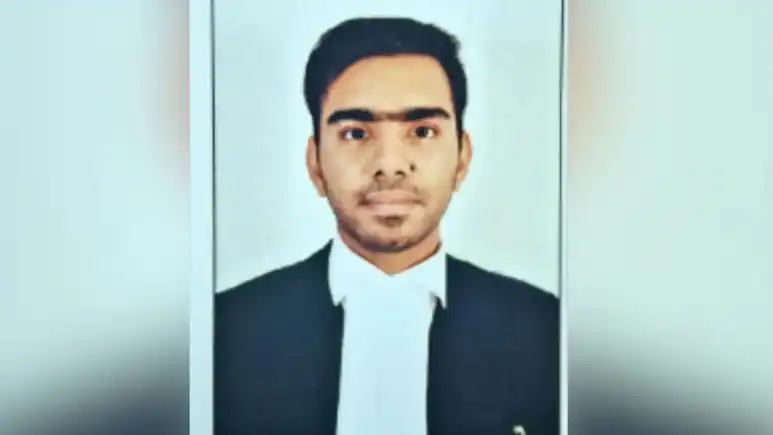
When Silence Becomes Heavier Than Law: Reflections on the Recent Judge Suicide Case in India

Written and analysed by Shonee Kapoor
Legal Consultant, Author & Men's Rights ActivistIndia recently witnessed a deeply disturbing incident involving a young judicial officer whose death has now sparked nationwide debate around mental health, marital conflict, emotional harassment, and the silent pressure carried by men within legal and social systems.
The case of Judge Aman Kumar Sharma is not just another headline. It is uncomfortable because it touches a reality society often avoids discussing openly — the emotional collapse of individuals who appear professionally strong from the outside, yet internally carry unbearable personal distress.
According to reports, the young judge died by suicide in Delhi, and allegations made by his family point toward prolonged emotional strain arising from marital disputes and alleged harassment. Investigations are underway, and as with every legal matter, conclusions must ultimately come from due process and evidence. But beyond the legal framework lies a larger human question that deserves serious attention.
How much emotional pain does it take for a person trained to interpret law, resolve disputes, and maintain composure in courtrooms to finally lose hope in private life?
That question is what has shaken many people across the country.
For years, conversations around mental health have rightly expanded in India. Awareness campaigns, workplace discussions, and public discourse have encouraged people to speak up. Yet there remains a visible gap when the suffering involves men, particularly in cases linked to marital conflict, emotional isolation, or social humiliation. Many men continue to fear that expressing emotional exhaustion may be interpreted as weakness, aggression, instability, or insensitivity.
This silence becomes even more dangerous when the individual belongs to a profession associated with authority or resilience. Judges, police officers, military personnel, doctors, and senior corporate professionals are often expected to “handle pressure.” Society assumes that because they guide others through difficult situations, they themselves must naturally be emotionally equipped to survive everything.
Reality does not work that way.
Professional capability does not protect anyone from loneliness, humiliation, manipulation, anxiety, or emotional breakdown. A courtroom title cannot shield a human being from pain inside their own home.
The larger concern emerging from this case is not about choosing sides between men and women. Turning such tragedies into gender wars only weakens genuine conversations. The issue is accountability, fairness, and emotional safety for everyone involved in relationships and legal disputes.
There have been countless cases where women genuinely suffered abuse and needed strong legal protection. Those safeguards remain essential. At the same time, there is also growing public concern around situations where legal provisions, social pressure, emotional intimidation, or prolonged conflict may psychologically destroy the other person involved. A mature society must be capable of acknowledging both realities together without dismissing either side.
One of the most painful aspects of such incidents is that warning signs often exist long before the tragedy occurs. Emotional withdrawal, hopeless conversations, visible stress, social isolation, or repeated statements about being unable to continue are frequently noticed too late. Families sometimes see fragments of distress but underestimate its seriousness because the individual continues functioning externally.
That external functioning can be deceptive.
Many people continue attending work, appearing calm, responding normally, and fulfilling responsibilities while internally collapsing every single day.
This case has also reopened discussion around the need for institutional mental health support within high-pressure professions. The judiciary, in particular, deals daily with conflict, crime, trauma, social disputes, and immense responsibility. Yet emotional support systems within such professions often remain weak or culturally underused. Seeking therapy or counseling is still stigmatized in many environments where strength is associated with emotional suppression.
India now stands at a point where mental health conversations must move beyond motivational slogans and become practical support mechanisms. Emotional harassment, psychological pressure, and sustained personal conflict can affect anyone regardless of gender, profession, status, or educational background.
Sometimes the strongest-looking people are simply the ones suffering most quietly.
The death of a young judge should not become just another cycle of outrage followed by forgetfulness. Whether the investigation ultimately proves or disproves the allegations being discussed publicly, one fact already remains undeniable — a human life reached a point where continuing no longer felt possible.
That alone should force society to pause and reflect.
Not every wound leaves visible marks.
Not every victim speaks loudly.
And not every battle happens inside a courtroom.
Related Articles
What Legal Remedies Are Available For Men In India? 498A, Divorce, Maintenance, Custody & False Cases
Know the legal remedies available for men in India against false 498A, maintenance, domestic violence, custody battle...
Can Maintenance Be Reduced Or Cancelled Later? Indian Law Every Husband Must Know
Can a husband reduce or cancel maintenance later in India? Know Section 146 BNSS, Section 127 CrPC, HMA Section 25, D...
What To Do If Wife Takes Child Away Illegally? Father’s Legal Remedies In India
If your wife has taken your child away without consent, do not panic, threaten, or file emotional complaints. Indian ...





Share Your Thoughts
Comments are moderated before publication.