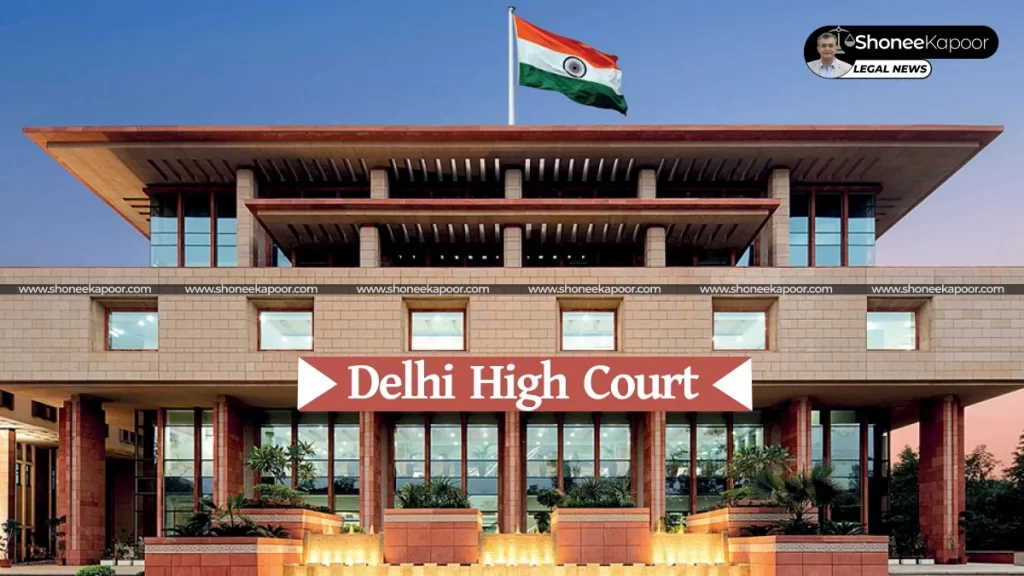
The Delhi High Court ruled that permanent alimony cannot be granted to a financially independent spouse. emphasizing that no alimony should be awarded when a spouse is self-sufficient. The Court stressed that alimony is meant for genuine financial need, not enrichment or equality between capable individuals.
NEW DELHI: The Delhi High Court has made a significant ruling that will reshape how courts view alimony in divorce cases. The Division Bench of Justices Anil Kshetarpal and Harish Vaidyanathan Shankar has ruled that a financially self-sufficient spouse cannot be awarded alimony.
This judgment came in the case where the Court upheld the Family Court’s decision to grant divorce to the husband on grounds of cruelty and denied the wife’s plea for permanent alimony.
“Judicial discretion under Section 25 [of the Hindu Marriage Act] cannot be exercised to award alimony where the applicant is financially self-sufficient and independent, and such discretion must be exercised properly and judiciously, based on the record, the relative financial capacities of the parties, and the absence of any material demonstrating economic vulnerability on the part of the Appellant.”
The Court emphasized that permanent alimony is a form of social justice, meant to protect a dependent spouse from hardship — not a tool for financial gain or enrichment. It ruled that anyone claiming alimony must show a genuine financial need. The Court further said:
“The short duration of cohabitation, the absence of children, the Appellant’s substantial and independent income, and the lack of credible evidence of financial necessity cumulatively negate any claim for permanent alimony. Accordingly, we find no justifiable ground to interfere with the findings of the learned Family Court, and the prayer for permanent alimony is therefore rejected.”
The couple married in January 2010. The wife, a senior IRTS officer (Group A), and the husband, a practising advocate, both had previous marriages. Their relationship soured within 14 months, and they separated in March 2011.
The husband alleged that his wife subjected him to mental and physical cruelty, including abusive language, insulting text messages, denial of conjugal rights, and humiliation in social and professional life.
The Family Court found the wife guilty of mental cruelty based on her messages, which contained derogatory words and attacks on the husband’s mother, including calling her “randi” (prostitute) and the husband “bastard”, “son of a bitch”, and other abusive terms. The High Court agreed that such conduct caused grave mental agony.
It noted:
“The text messages in question contained imputations of illegitimacy, filthy epithets directed at the Respondent’s mother and other degrading expressions — a pattern of conduct which, cumulatively, the learned Family Court was entitled to regard as causing grave mental agony to the Respondent.”
The Court’s Findings
The Bench upheld the Family Court’s decree of divorce, observing that the wife’s conduct amounted to cruelty under Section 13(1)(ia) of the Hindu Marriage Act, 1955. The judges reasoned that marital abuse through words, humiliation, and verbal attacks can be as damaging as physical violence.
It said:
“Mere trivial irritations, quarrels, or normal wear and tear of married life are not adequate for granting divorce on the ground of mental cruelty. But persistent abusive language, public humiliation, and denial of marital companionship reach a degree that makes married life intolerable.”
The Court also rejected the wife’s plea that she had resumed cohabitation after filing of the divorce petition. The Bench found no proof of reconciliation and stated that her demand of ₹50 lakhs as a condition for divorce exposed a financial motive rather than emotional intent.
“When a spouse, while ostensibly resisting the dissolution of marriage, simultaneously predicates consent on payment of a substantial sum, it indicates that the resistance is not anchored in affection, reconciliation or the preservation of the marital bond, but in pecuniary considerations.”
“The inference drawn by the learned family court that the Appellant’s approach bore a clear financial dimension cannot be said to be unfounded or unreasonable; rather, it was a logical conclusion based on the evidence before it.”
Conclusion
Ultimately, the Delhi High Court ruled that a financially independent spouse cannot seek alimony, especially when there is no child, no genuine financial need, and clear evidence of self-sufficiency.
The judgment reinforces that Section 25 of the Hindu Marriage Act is not a right for monetary gain but a safeguard against genuine hardship.
This ruling is a strong reminder that alimony is meant to support, not enrich, and financial independence bars entitlement to it. It is also a significant win for fairness in matrimonial law — ensuring that capable individuals do not misuse maintenance provisions for personal profit.
Divorce on ground of cruelty (physical or mental).
Marriage dissolved as wife’s conduct—abuse, humiliation, denial of conjugal rights—constituted mental cruelty.
Section 25, Hindu Marriage Act 1955
Permanent Alimony and Maintenance — Court may award support to a spouse after divorce.
Quoted in ruling: “Judicial discretion … cannot be exercised to award alimony where the applicant is financially self-sufficient and independent.” No alimony granted to the IRTS officer.
Counsel for Appellant (Wife): Mr. Sarim Naved and Mr. Zeeshan Ahmad, Advocates & Appellant in person through VC
Counsel for Respondent (Husband): Mr. Rakesh Tiku, Senior Advocate with Ms. Arpan Wadhawan, Advocate & Respondent in person
Statutory Provisions Involved: Section 13(1)(ia) & Section 25 of the Hindu Marriage Act 1955; Section 14 of the Family Courts Act 1984; Section 65B of the Indian Evidence Act 1872
Family Court Judgment Appealed: Judgment dated 31 August 2023 by Principal Judge, Family Court, Shahdara, Karkardooma Courts, Delhi
Decision: Divorce on ground of cruelty upheld; wife’s claim for permanent alimony rejected
Ground: Mental cruelty and financial independence of the wife negate her claim for alimony
Parties’ Occupation: Husband – Advocate; Wife – Group ‘A’ Officer, Indian Railway Traffic Service (IRTS)
Disclaimer: The views and opinions expressed in this article are those of the Indian courts and do not necessarily reflect the official policy or position of “ShoneeKapoor.com” or its affiliates. This article is intended for informational and educational purposes only. The content provided is not legal advice, and viewers should not act upon this information without seeking professional counsel. Viewer discretion is advised