
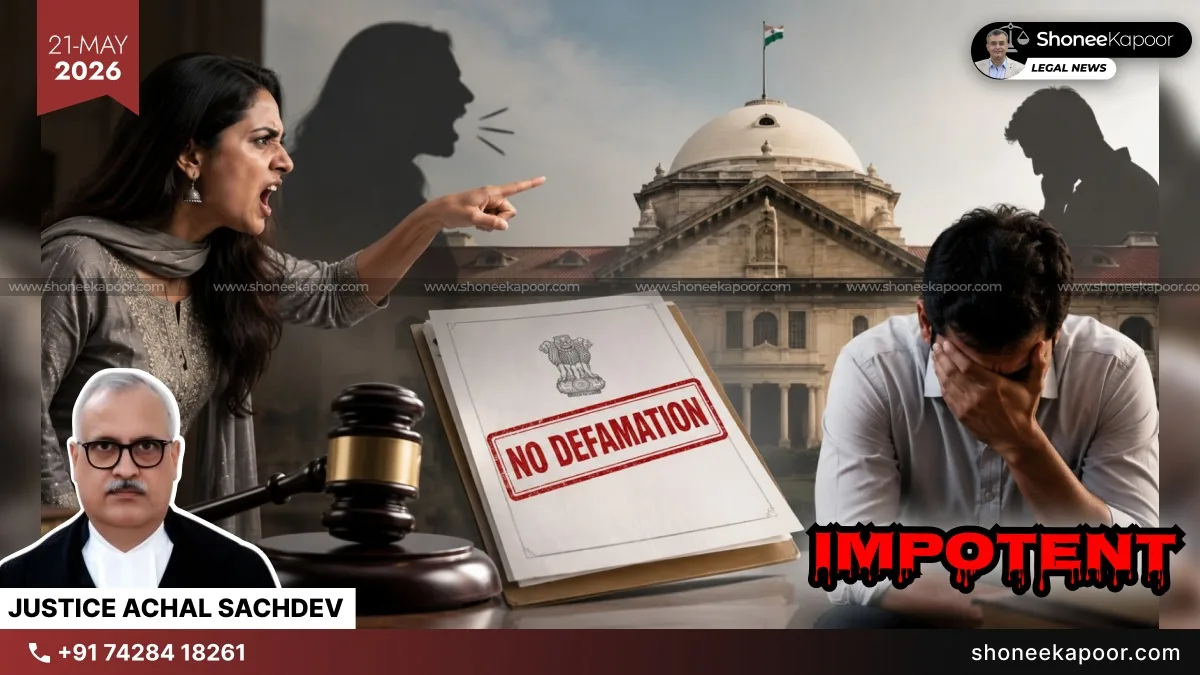
Wife Calling Husband “Impotent” In Matrimonial Dispute Not Defamation If Supported By Medical Evidence: Allahabad High Court Quashes Summoning Order

Curated by NEWS DESK
Editorial DeskShould sensitive medical and sexual allegations be publicly circulated when they can permanently damage a man’s reputation?
The Allahabad High Court held that allegations made in good faith during genuine matrimonial disputes may receive protection under Exception 8 of Section 499 IPC.
PRAYAGRAJ: The Allahabad High Court, in a judgment delivered by Justice Achal Sachdev on 15 May 2026, quashed a criminal defamation case filed by a husband against his wife after she alleged that the marriage could not be consummated because of his medical condition.
The case arose after the husband filed a complaint under Section 500 IPC claiming that his reputation was damaged when his wife allegedly called him “impotent” before family members, police authorities and in matrimonial proceedings. The husband argued that these allegations spread in society and caused humiliation to him and his family.
According to court records, the marriage took place on 25 November 2022. The wife later claimed that the marriage was never consummated and alleged that the husband’s medical condition had been hidden before marriage. She also filed criminal proceedings relating to dowry harassment, domestic violence and cruelty.
The husband thereafter filed a defamation complaint against her, following which the trial court in Gorakhpur passed a summoning order on 21 December 2024. Challenging that order, the wife approached the High Court under Section 528 BNSS seeking quashing of the proceedings.
During the hearing, the wife argued that the allegations were made only in connection with legal proceedings and complaints before lawful authorities. She also relied upon a medical examination report from Medanta Hospital, Gurugram dated 27 August 2024 which allegedly showed low serum testosterone levels.
The Court examined whether such allegations amounted to criminal defamation under Section 499 IPC. While discussing the law, the Court reproduced:
“Exception 1 of Section 499 I.P.C.-Imputation of truth public good requires to be made or published. It is not defamation to impute anything which is true concerning any person, if it for the public good that the imputation should be made or published. Whether or not it is for the public good is a question of fact.”
The Court further stated:
“Alleging impotency without any medical evidence on the date on which such an imputation has been made would definitely amount to defamation.”
Relying on the Supreme Court judgment in Chaman Lal Vs. State of Punjab (1970) 1 SCC 590, the Court observed that good faith requires care, caution and genuine intention without malice.
After considering the facts, the High Court concluded that the wife’s allegations were made in connection with her matrimonial grievances, allegations of dowry harassment and non-consummation of marriage. The Court held that the statements were not made with malicious intent to publicly humiliate the husband.
The Court finally observed:
“It clearly shows that the statement has been made in good faith without malice towards opposite party no.3 and her statement is substantiated by medical examination report of opposite party no.3, therefore, the order impugned has been passed without considering these aspects and is liable to be set aside.”
Accordingly, the Allahabad High Court allowed the petition and quashed the summoning order passed against the wife in the criminal defamation case.
Explanatory Table: Laws And Sections Involved
| Law / Section | Purpose | How It Was Used In This Case |
| Section 528 BNSS | Power to seek quashing of proceedings/orders | Wife approached High Court to quash summoning order |
| Section 500 IPC | Punishment for criminal defamation | Husband filed complaint alleging damage to reputation |
| Section 499 IPC | Defines criminal defamation | Court examined whether wife’s statements amounted to defamation |
| Exception 1 to Section 499 IPC | Truth made for public good is protected | Wife argued her allegations were truthful |
| Exception 8 to Section 499 IPC | Good faith complaint to lawful authority is protected | Court held police complaint was protected under this exception |
| Section 200 CrPC | Recording complainant’s statement | Husband’s statement recorded before Magistrate |
| Section 202 CrPC | Inquiry before issuing summons | Witness statements recorded during complaint inquiry |
| Section 498A IPC | Cruelty by husband or relatives | Wife had earlier lodged cruelty and dowry FIR |
| Section 406 IPC | Criminal breach of trust | Included in wife’s FIR regarding matrimonial allegations |
| Section 354A IPC | Sexual harassment | Mentioned in wife’s criminal case |
| Section 34 IPC | Common intention | Added against husband and family members in FIR |
| Section 13 Hindu Marriage Act | Divorce provision | Husband had earlier filed divorce petition |
| Section 12(1)(a) Hindu Marriage Act | Nullity due to impotency/non-consummation | Wife later filed proceedings seeking annulment/divorce |
Case Details
- Case Title: Priya Tiwari vs State of U.P. and 2 Others
- Case Number: Application U/S 528 BNSS No. 6618 of 2025
- Connected Complaint Case: Complaint Case No. 2545 of 2024
- Court: Allahabad High Court
- Bench: Hon’ble Justice Achal Sachdev
- Neutral Citation: 2026:AHC:112914
- Date Of Judgment: 15 May 2026
- Counsels:
- For Applicant: Anshuman Singh, Vinay Kumar Dubey
- For Opposite Parties: Ashok Kumar, G.A.
Key Takeaways
- Allegations involving a man’s masculinity or sexual capability can socially destroy him long before medical facts are fully examined.
- Even when medical records later become part of the dispute, the public humiliation and reputational damage suffered by a man often becomes irreversible.
- Matrimonial conflicts today increasingly involve deeply personal accusations that permanently affect a man’s dignity, family life and social standing.
- Sensitive medical and intimate issues should never become tools for public shaming or emotional pressure during legal battles.
- A man’s reputation deserves the same protection, sensitivity and presumption of fairness that society demands for everyone else.
This Could Change Your Case-Get FREE Legal Advice-Click Here!
Disclaimer: The views and opinions expressed in this article are those of the Indian courts and do not necessarily reflect the official policy or position of “ShoneeKapoor.com” or its affiliates. This article is intended for informational and educational purposes only. The content provided is not legal advice, and viewers should not act upon this information without seeking professional counsel. Viewer discretion is advised.
Related Articles
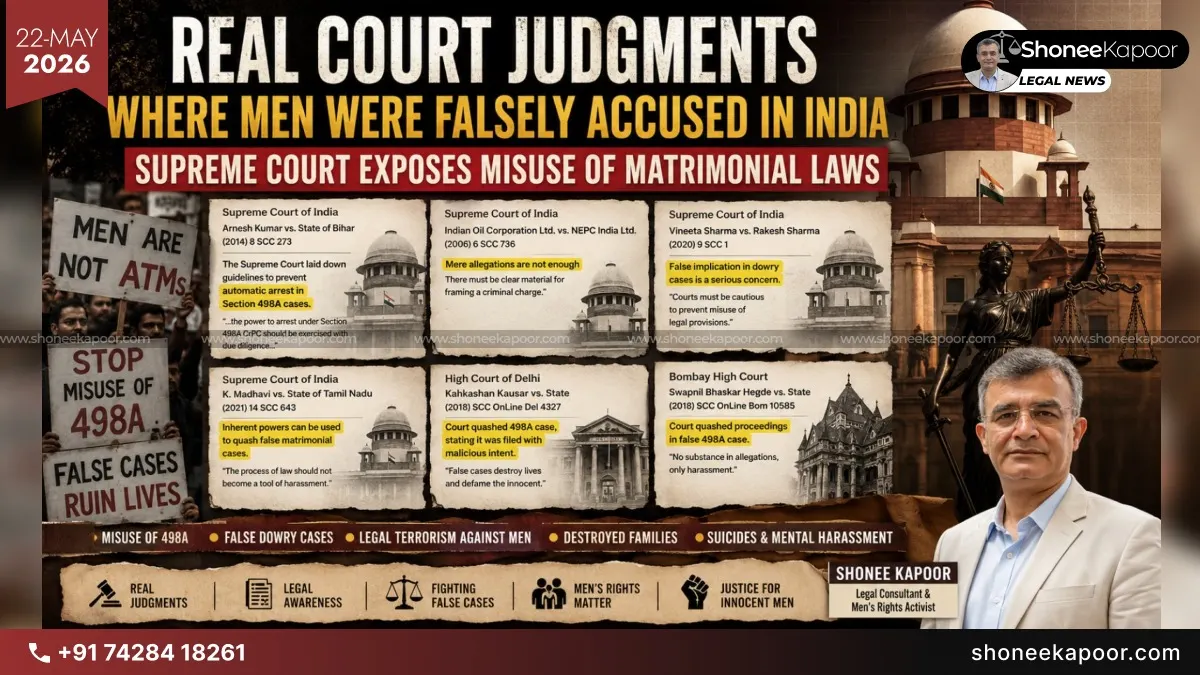
Real Court Judgments Where Men Were Falsely Accused In India
Real Indian court judgments with correct case titles and citations where courts protected men and families from false...
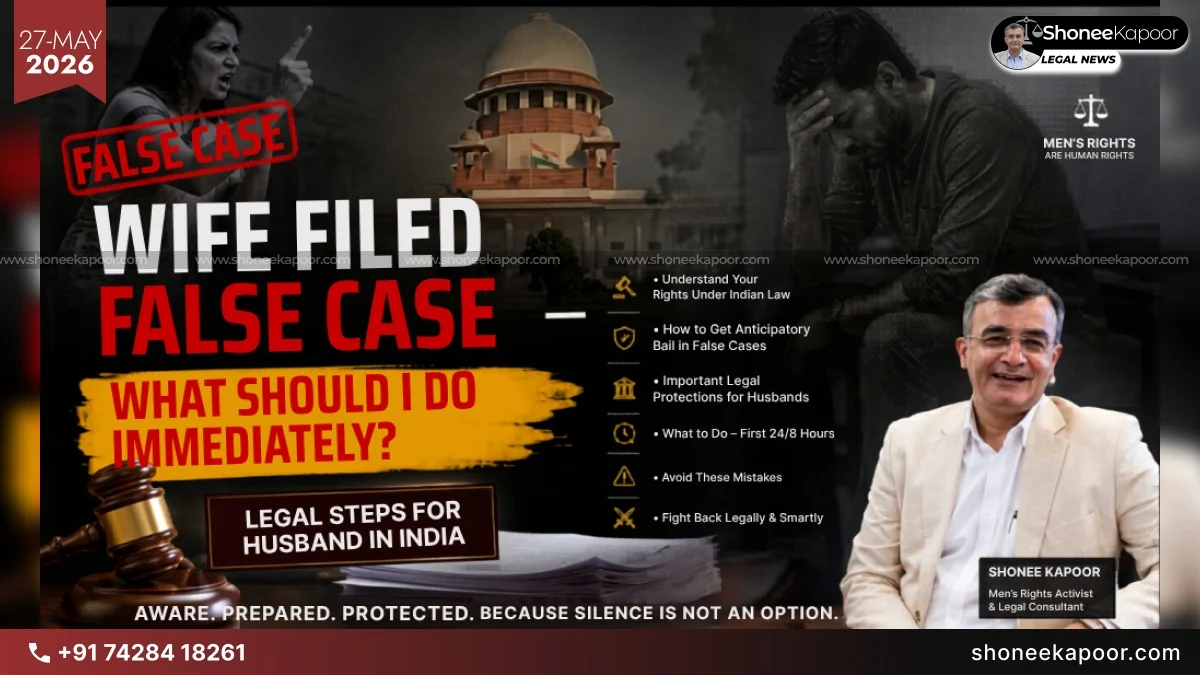
Wife Filed False Case – What Should I Do Immediately? Legal Steps For Husband In India
False 498A, DV, dowry or maintenance case filed by wife? Know the immediate legal steps, BNS-BNSS remedies, Supreme C...
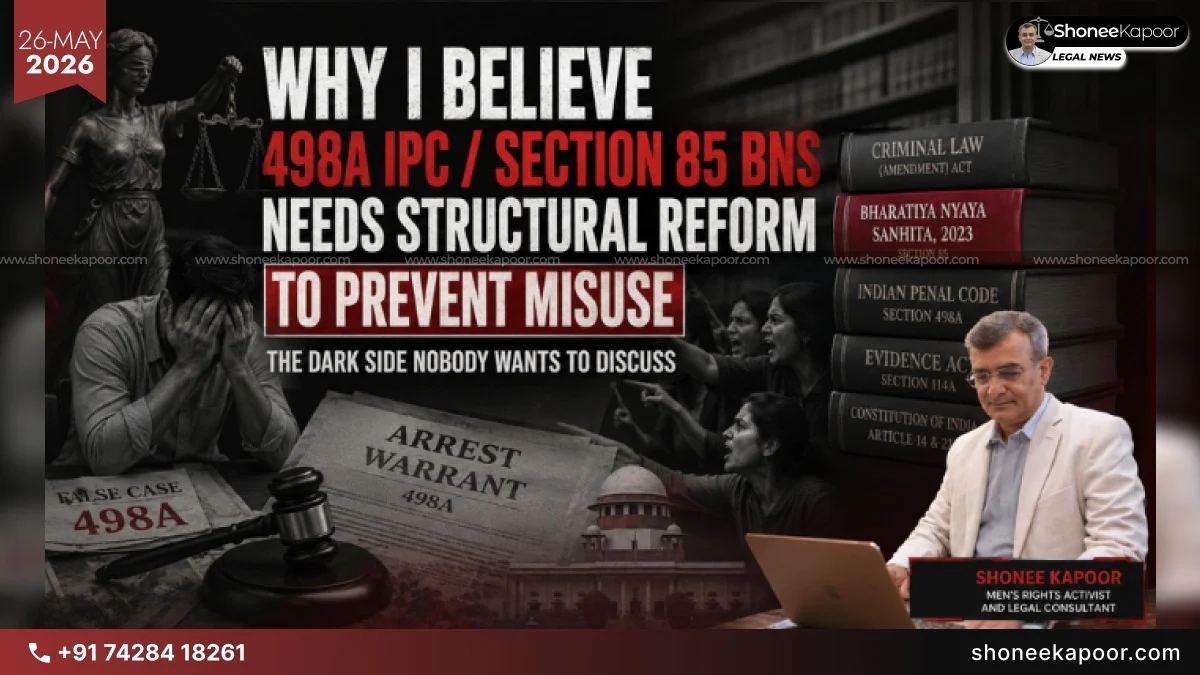
Why I Believe 498A IPC / Section 85 BNS Needs Structural Reform To Prevent Misuse
Section 498A IPC, now Section 85 BNS, protects women from cruelty. But repeated misuse, vague allegations and mass im...
Share Your Thoughts
Comments are moderated before publication.