
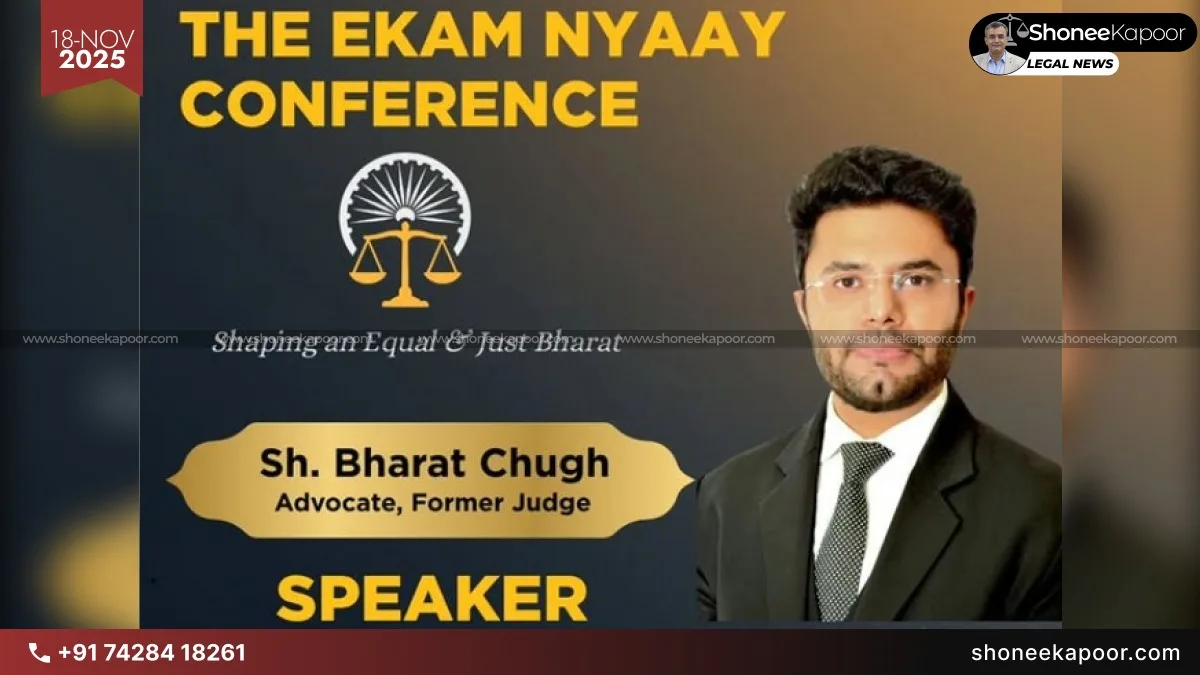
Advocate Bharat Chugh – Former Judicial Officer Calls India’s Criminal System A ‘Criminal Injustice System’

Curated by NEWS DESK
Editorial DeskExposing India’s ‘Criminal Injustice System’: Former Judicial Officer Bharat Chugh Reveals Shocking Flaws in Arrests, Bail, and Trial Delays
NEW DELHI: When most people hear the term “criminal justice system,” they imagine fairness, accountability, and protection for the innocent. But what happens when the very system meant to uphold justice starts punishing people before guilt is proven?
Bharat Chugh, a former judicial officer turned advocate, calls it exactly what it is a criminal injustice system. From misuse of laws like Section 69 BNS to unnecessary arrests that destroy young lives and relationships, he argues that India’s legal machinery often prioritizes procedure over people, leaving countless individuals trapped in a nightmare of legal harassment long before a trial even begins.
Bharat Chugh didn’t mince words when describing the reality of India’s criminal legal system. Drawing on his rare perspective as both a former judge and a practicing advocate, he broke down the so-called “criminal justice system” into what he calls five circles of hell: the FIR, arrest, bail, charge or discharge, and trial.
As he puts it:
“Process itself is the punishment. Even when victory comes, it comes so late that it is more devastating than a defeat.”
Bharat Chugh illustrated how ordinary cases, even those rooted in personal relationships, can spiral into criminal prosecutions that ruin reputations, careers, and lives.
Highlighting Section 69 BNS, he explained how allegations of a “false promise to marry” or “misconception of fact” can land young men in jail, regardless of intent, emphasizing:
“The court does not know what goes on in the hearts of men… what business does the state have doing this?”
Bharat Chugh explained that the current evaluation system for judges often encourages a focus on quantity rather than quality. Judges are scored based on the number of cases disposed of, with more weight given to acquittals, subtly influencing how justice is administered.
He argues this can skew priorities and compromise the fairness of the system.
“So the High Court has to evaluate how good you are as a judge. How much work have you done? How many cases have you disposed of? How many of them are discharged cases? How many of them are final acquittals? So for a final acquittal, you get seven points; for a discharge, you get two points.”
He also delved deep into Section 69 BNS, which deals with allegations like “breach of promise to marry” or cases of alleged consent obtained under misconception. According to him, this law is a trap that criminalizes human relationships rather than protecting them. He sharply remarked:
“A mere misunderstanding can convert a private matter into a criminal case overnight.”
Pointing to the systemic flaws, he said:
“The law is blind to intent and nuance. It only knows accusation, procedure, and punishment.” He further criticized the courts for treating such cases with mechanical rigidity, noting, “Justice delayed is justice denied. But here, justice delayed is justice destroyed.”
Bharat Chugh didn’t stop at criticism; he also laid out a roadmap for reforming what he calls the “criminal injustice system.” He emphasized the need for clarity, fairness, and accountability, saying:
“Laws must protect the innocent, not punish them for bureaucratic errors or societal biases.”
He proposed stricter guidelines for police investigations, mandatory pre-trial mediation in certain sensitive cases, and judicial sensitization workshops:
“Justice should be about truth, not paperwork,”
He asserted, highlighting the importance of human judgment over procedural rigidity. Chugh also called for amendments in Section 69 BNS, warning:
“Without reform, the law risks destroying lives more than it protects them.”
His recommendations reflect a bold attempt to make the system more humane, predictable, and accessible for ordinary citizens, signaling a potential shift from punitive to protective justice.
In conclusion, Bharat Chugh’s critique is more than just an opinion it’s a wake-up call for the legal system. By calling it a “criminal injustice system,” he forces us to confront the flaws that often go unnoticed: delayed trials, procedural loopholes, and the human cost of a rigid system:
“Reform is not optional; it’s a necessity”
he warns, urging lawmakers, law enforcement, and citizens alike to rethink how justice is delivered.
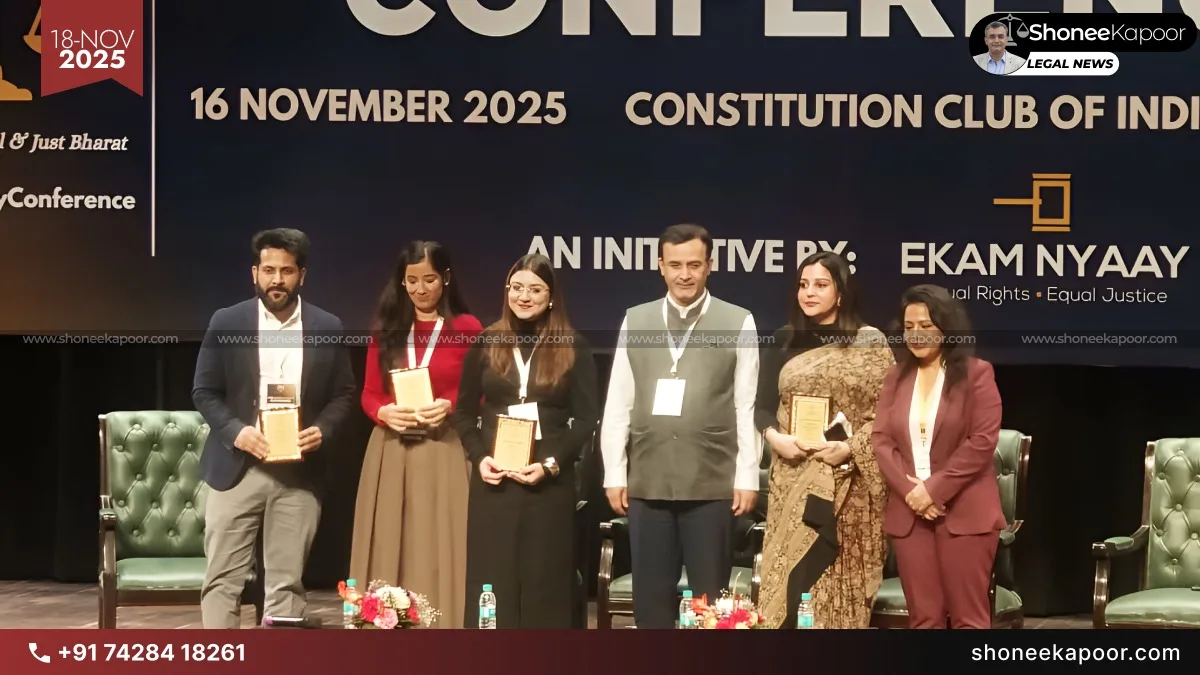
Conference organised by Ekam Nyaay Foundation
Former judge and legal scholar Bharat Chugh delivered the keynote address at the Ekam Nyaay Conference – Shaping an Equal and Just Bharat, held at the Constitution Club of India on 16 November 2025.
Organised in the run-up to International Men’s Day (19 November), the conference focused on the need for a justice system that is fair, balanced, and sensitive—one that protects innocent individuals from wrongful prosecution while ensuring that genuine victims receive justice.
Highlighting Ekam Nyaay’s work over the last year, its founder Deepika Narayan Bhardwaj explained:
“We work daily with men and their families who are devastated by false allegations. Many reach us when they have completely broken down. Our foundation supports them at the grassroots level—men who have hit their lowest point because of fabricated cases, police indifference, or never-ending court battles. Countless men and even their parents call us, suffocating under the weight of stigma. We guide them through FIRs, court processes, and the harsh social judgments they face.”
Sharing the organisation’s annual data, Bhardwaj added:
“In the past year, we have counselled over 2,000 men, facilitated the arrest of 37 offenders and false accusers, supported families in registering 24 FIRs, carried out three major research studies, and helped publish 123+ articles across print and digital media. Our content has also reached more than 700 million views on social platforms.”
Explanatory Table For Sections And Case Laws Cited
| Section / Law | Meaning / Purpose | Bharat Chugh’s Observation / Statement |
| Section 41 CrPC | Police can arrest without warrant under certain circumstances | “Arrests are often misused, turning preventive powers into punitive tools.” |
| Section 167 CrPC | Provides limits for police custody and magistrate remand | “Custodial delays push innocent people into months of uncertainty.” |
| Section 173 CrPC | Police report submission to magistrate | “Investigations are incomplete or delayed, yet the system moves slowly to prosecute.” |
| Section 438 CrPC | Anticipatory bail provision | “Even innocent people face hurdles getting anticipatory bail due to procedural rigidity.” |
| Section 482 CrPC | High Court’s inherent powers to prevent abuse of process | “Courts have powers but systemic backlog and hesitancy dilute justice.” |
| Section 302 IPC | Punishment for murder | “Serious charges take years to resolve, impacting both victims’ and accused families.” |
| Section 420 IPC | Cheating and dishonesty | “Minor yet complex cases get dragged for years due to procedural loopholes.” |
Event Details
- Key Theme:
- He called it a “criminal injustice system” instead of a criminal justice system.
- The aim was to highlight systemic delays, misuse of power, and procedural flaws.
- Main Points Discussed:
- Arbitrary Arrests: Police often misuse Section 41 CrPC to arrest without proper cause.
- Delayed Investigations: Under Section 173 CrPC, reports are delayed, affecting both accused and victims.
- Custodial Delays: Section 167 CrPC remand limits are often stretched, keeping innocent people in prolonged custody.
- Bail Hurdles: Even anticipatory bail under Section 438 CrPC is difficult due to procedural rigidity and court backlog.
- Judicial Power Underused: Section 482 CrPC allows courts to prevent abuse, but systemic hesitation limits its effectiveness.
- Lengthy Trials: Serious charges (like Section 302 IPC—murder) and minor crimes (Section 420 IPC—cheating) take years to resolve.
- Impact on Society: Families of both victims and accused suffer due to delays and inefficiencies.
- Quotes from Bharat Chugh:
- “Arrests are often misused, turning preventive powers into punitive tools.”
- “Custodial delays push innocent people into months of uncertainty.”
- “Even innocent people face hurdles getting anticipatory bail due to procedural rigidity.”
- “Courts have powers but systemic backlog and hesitancy dilute justice.”
- · Event Takeaway:
- He emphasized that legal reforms and stricter accountability are urgently needed.
- Advocated for awareness among the public and legal fraternity about misuse of procedural laws.
Disclaimer: The views and opinions expressed in this article are those of the Indian courts and do not necessarily reflect the official policy or position of “ShoneeKapoor.com” or its affiliates. This article is intended for informational and educational purposes only. The content provided is not legal advice, and viewers should not act upon this information without seeking professional counsel. Viewer discretion is advised.
Related Articles
Can a ‘girlfriend’ of the husband be implicated under Section 498A?
From landmark Supreme Court rulings to ground-level misuse, this article unpacks how Section 498A defines ‘husband’ a...
False 498A – 85 BNS Fear And Need Legal Help? The Law Changed, The Risk Remains, The Defence Must Change Too
If arrest is “not automatic” now, why are families still rushing for bail and protection? Is Section 85 BNS just a ne...
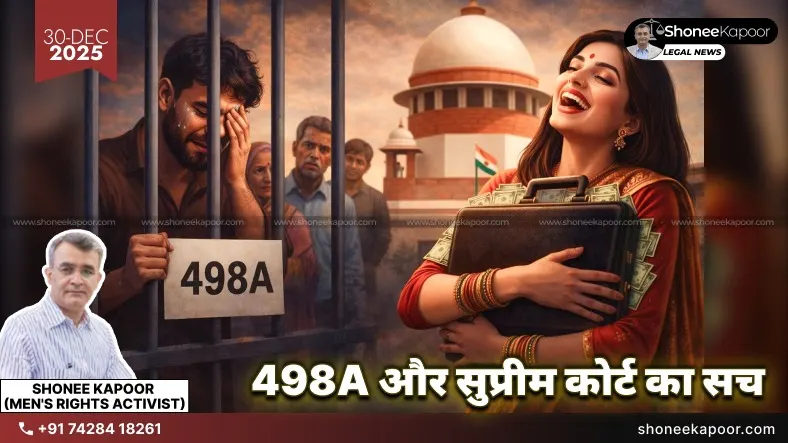
498A का सच: झूठे मामलों में गिरफ्तारी नहीं, सुप्रीम कोर्ट ने पुरुषों की स्वतंत्रता पर खींची लाल रेखा
धारा 498A के नाम पर बिना जांच गिरफ्तारी ने हजारों निर्दोष पुरुषों और परिवारों की जिंदगी तबाह की है। सुप्रीम कोर्ट ने ...
Share Your Thoughts
Comments are moderated before publication.