
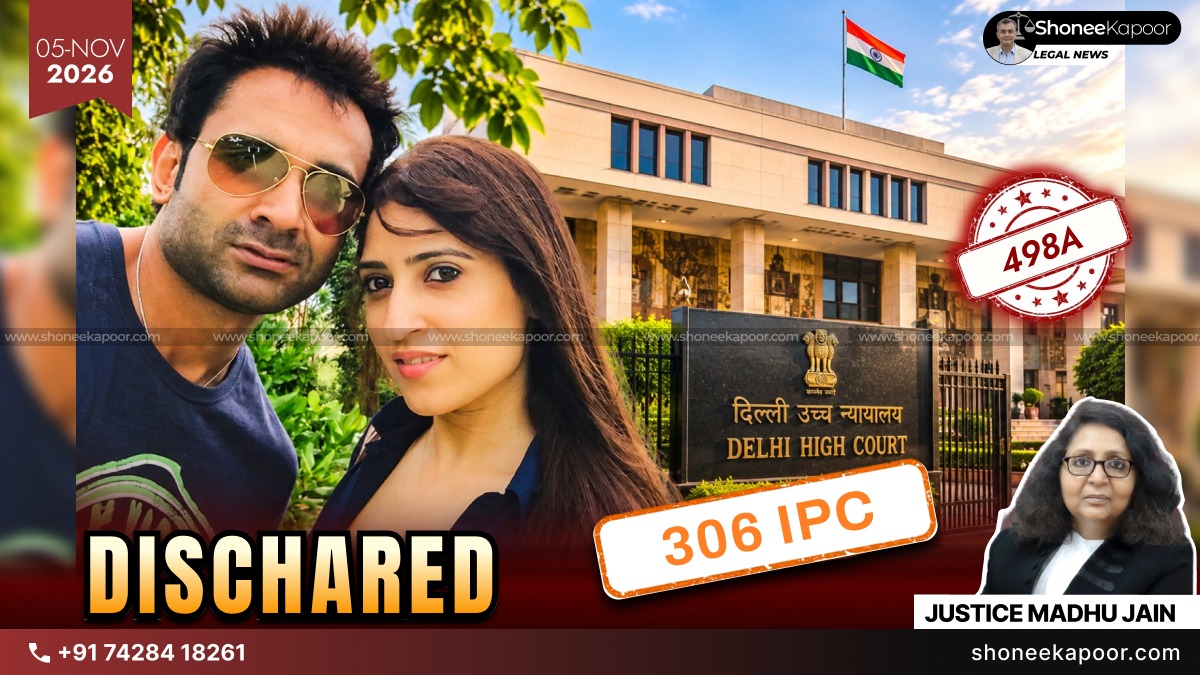
Anissia Batra Suicide Case | Husband Discharged After 8 Years, Delhi High Court Clears Him Of Cruelty & Abetment Of Suicide Charges

Curated by NEWS DESK
Editorial DeskNEW DELHI: The Delhi High Court has discharged Mayank Singhvi, husband of deceased flight attendant Anissia Batra, of charges of cruelty under Section 498A IPC and abetment of suicide under Section 306 IPC in a criminal case dating back to 2018.
Justice Madhu Jain held that the prosecution evidence did not establish the necessary legal ingredients to frame these charges against the husband. The Court also upheld his discharge from the dowry death charge under Section 304B IPC and maintained the discharge of his parents.
Anissia Batra, a 39-year-old flight attendant working with a German airline, allegedly died by suicide on July 13, 2018, after jumping from the terrace of her matrimonial home in Panchsheel Park, South Delhi. She had been married to Mayank Singhvi for approximately two years.
Following her death, her family alleged that she had faced physical and mental cruelty, financial demands and pressure concerning the sale proceeds of a flat jointly owned by Anissia and her mother.
In December 2019, the Saket Sessions Court discharged the husband of the dowry death charge under Section 304B IPC but directed that charges under Sections 498A and 306 IPC be framed against him. His parents were also discharged of charges under Sections 304B and 498A IPC.
The husband challenged the order before the Delhi High Court, while Anissia's mother and the State filed separate revision petitions challenging the Sessions Court's decision.
During the proceedings, the prosecution relied on WhatsApp messages allegedly sent by Anissia shortly before her death. One message reportedly blamed her husband for driving her towards suicide.
However, the Delhi High Court clarified that merely blaming a husband for suicide does not automatically establish criminal abetment. Sufficient material must show the necessary intentional involvement under Section 107 IPC.
The Court observed:
"The deceased's attribution of responsibility to another person is a relevant piece of evidence, but it does not by itself determine whether the person named has committed the offence under Section 306 of IPC,"
The High Court further explained that marital disputes, allegations of harassment or a strained matrimonial relationship cannot automatically constitute abetment of suicide unless the essential legal requirements are satisfied.
Regarding the dowry death allegations, the Court clarified that an unnatural death within seven years of marriage does not automatically establish an offence under Section 304B IPC. The prosecution must show the necessary connection between the alleged cruelty or harassment and a dowry demand.
The Court also expressed concern over husbands and their relatives facing criminal prosecution based on general allegations without sufficient material establishing their specific involvement.
It observed:
"The law must therefore afford effective protection to a woman subjected to cruelty, while ensuring that relatives are not made to face prosecution merely because of their relationship with the husband, and even the husbands should not be, without cause, penalised,"
The High Court further emphasised that parents must support daughters facing domestic violence or persistent cruelty rather than pressuring them to continue an unsafe marriage.
The Court stated:
"A daughter's return to her parents should never be regarded as a matter of shame for them. Preserving a marriage cannot take precedence over her safety and dignity,"
Accordingly, the Delhi High Court allowed Mayank Singhvi's criminal revision petition and discharged him of offences under Sections 498A and 306 IPC. The Court also dismissed the revision petitions filed by Anissia Batra's mother and the State, thereby upholding the discharge of the husband's parents.
.
EXPLANATORY TABLE OF LAWS AND SECTIONS
| Law / Section | What It Means | Application in This Case |
|---|---|---|
| Section 304B IPC | Punishes dowry death where statutory conditions are satisfied. | Husband and parents discharged; necessary dowry-related connection not established at charge stage. |
| Section 498A IPC | Punishes specified cruelty towards a married woman by her husband or his relatives. | Husband discharged; parents' discharge upheld. |
| Section 306 IPC | Punishes abetment of suicide. | Husband discharged because the material did not disclose the required abetment. |
| Section 107 IPC | Defines abetment, including instigation, conspiracy involving an act or illegal omission, and intentional aid. | Court examined whether the husband intentionally contributed to the suicide. |
| Section 34 IPC | Addresses criminal acts committed with common intention. | Invoked with the allegations against the husband and his parents. |
| Section 113A, Evidence Act, 1872 | Permits a court to presume abetment of suicide by a married woman in specified circumstances. | Presumption was not automatic. |
| Section 113B, Evidence Act, 1872 | Provides a presumption concerning dowry death when statutory conditions are satisfied. | Required dowry-related foundation was insufficient. |
| Sections 227–228 CrPC | Govern discharge and framing of charges before a Sessions Court. | Court examined whether the evidence justified proceeding to trial. |
| Sections 397 and 401 CrPC | Govern criminal revision powers. | Used to challenge the Sessions Court's order. |
| Section 41A CrPC | Provided for notice of appearance before police in specified circumstances. | Notices were served during the 2018 investigation. |
CASE DETAILS
| Particular | Details |
|---|---|
| Case Title | Nillum Batra v. State & Ors. (and connected matters) |
| Court | Delhi High Court |
| Bench | Justice Madhu Jain |
| Case Numbers | CRL.REV.P. 29/2020, 170/2021 and 297/2022 |
| FIR | FIR No. 185/2018, Police Station Hauz Khas, Delhi |
| Sessions Court Order | December 18, 2019 |
| Counsel for Husband and Parents | Senior Advocates Siddharth Aggarwal and Amit Chadha, assisted by Pankaj Baghla, Vismita Diwam, Gurpreet Singh, Siddhant Saraswat, Manjit Walia and Harjas Singh |
| Counsel for Complainant | Senior Advocates Rebecca M. John and Vishal Gosain, assisted by advocates including Pravir Singh, Anushka Baruah and Pranav Das |
| Counsel for State | Meenakshi Dahiya, APP |
| Final Decision | Husband discharged under Sections 304B, 498A and 306 IPC; parents' discharge upheld; mother's and State's revision petitions dismissed. |
KEY TAKEAWAYS
- Husband Gets Relief After 8 Years: Delhi High Court discharged Mayank Singhvi of cruelty and abetment of suicide charges.
- Suicide Message Is Not Proof: Blaming a husband for suicide does not automatically establish criminal abetment.
- Dowry Death Allegations Rejected: An unnatural death within seven years of marriage alone cannot establish dowry death.
- Husband's Parents Protected: The High Court upheld their discharge, rejecting prosecution without sufficient legal grounds.
- Men Cannot Be Punished Without Cause: Matrimonial allegations must satisfy legal requirements before a husband faces a criminal trial.
Share Your Thoughts
Comments are moderated before publication.