
Can a woman’s lifestyle or past photos be used against a husband in a dowry case? The Karnataka High Court raised sharp questions during a hearing that may affect how such disputes are argued in court.
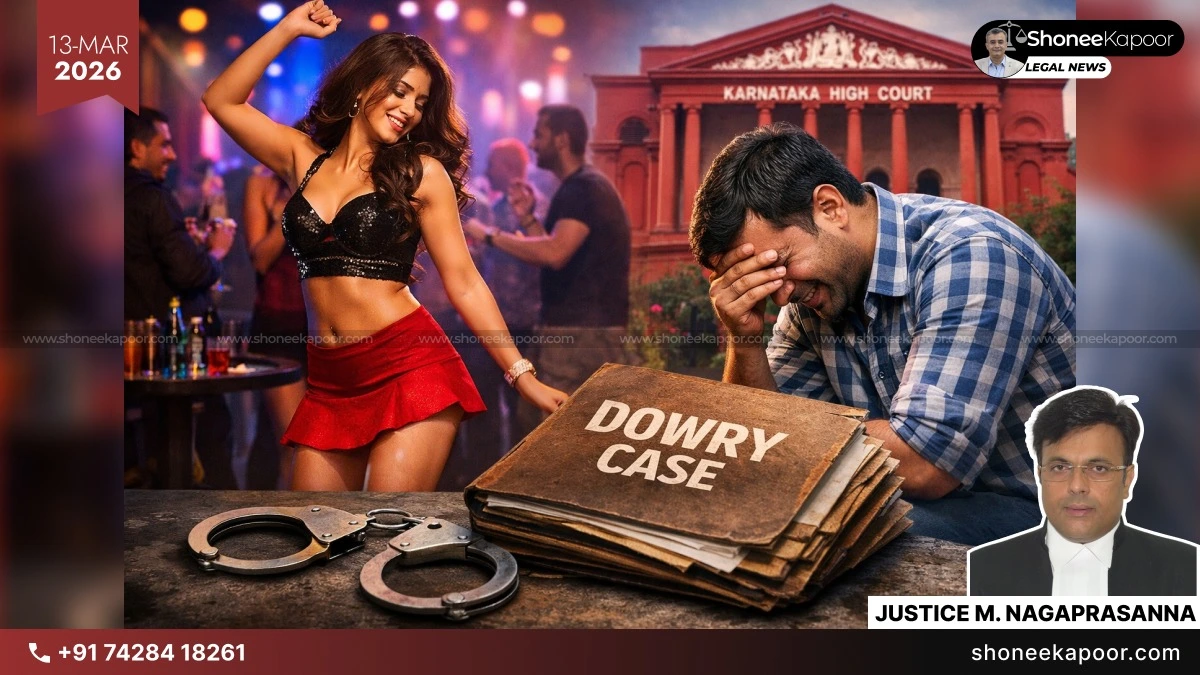
BENGALURU: During the hearing of a dowry harassment case, the Karnataka High Court made an observation that a woman dancing in a pub or wearing revealing clothes cannot automatically be considered a “bad” person. The court was dealing with an amendment application filed in a petition seeking to quash criminal proceedings.
The matter was heard by a single bench of Justice M. Nagaprasanna. The petition was filed by a husband and his parents who are facing allegations of dowry harassment. Their lawyers sought permission to place certain documents and correspondence on record, claiming they were relevant to the dispute between the couple.
Senior counsel C.V. Nagesh, appearing for the husband and his parents, requested the court to allow additional material related to the wife’s past lifestyle. According to the counsel, these documents would help explain the background of the marital dispute and the circumstances that led to the criminal case.
While explaining the relevance of these documents, the counsel stated:
“Let these documents go along with the petition. Kindly imagine this situation, suppose I file the documents, correspondence, tape recordings, her photographs with four or five other boys, and she dancing in the nightclub with skimpy dresses…”
At this point, the court interrupted and responded strongly to the suggestion that such material could reflect on a woman’s character.
The bench remarked:
“What’s wrong with it? If girls wear revealing clothes, can they be bad? Just because she lets herself loose, doesn’t mean she is bad. If she dances in a nightclub or a pub, that’s fine…”
During the hearing, Senior Advocate Lakshmi Iyengar, representing the wife, objected to the line of arguments and told the court that “unfortunate submissions are being made by the petitioner”.
Justice Nagaprasanna also noted that bringing up a woman’s past life or personal choices before marriage was not necessary for deciding the criminal allegations. The court indicated that the focus should remain on the legal issues in the case rather than on lifestyle or social judgments.
The judge then asked whether the husband was alleging any extramarital relationship after marriage. In response, the husband’s counsel said that the wife had lived a fast-paced lifestyle and claimed it was difficult for the husband to cope with it.
The counsel further argued before the court:
“Would your Lordship say that I should live my life with a characterless lady”.
The bench did not accept the argument that a woman’s lifestyle alone can determine her character or suitability in marriage. Justice Nagaprasanna clarified that such perceptions are subjective and cannot automatically justify allegations or counter-allegations in a legal dispute.
The court observed:
“It’s the husband’s personal perception. But a lady who leads a fast life is difficult to live with is not digestible. The allegations against you are different …”
During the proceedings, the wife’s lawyer also stated that the documents the husband wanted to produce did not cause any embarrassment to her client. Senior Counsel Lakshmi Iyengar told the court that her client had no objection to the material and said she had nothing to hide.
After hearing the arguments, the High Court allowed the earlier interim order staying the proceedings against the husband and his parents to continue for the time being. The matter, along with connected petitions, has been scheduled for further hearing.
Explanatory Table of Laws and Sections Relevant to the Case
| Law / Section | Statute | Explanation | Relevance in This Case |
| Section 498A | Indian Penal Code, 1860 | Criminal offence for cruelty by husband or relatives of husband toward a married woman. Cruelty includes harassment related to dowry demands or conduct likely to drive a woman to suicide or cause grave injury. | The criminal case against the husband and his parents arises from allegations of dowry harassment under this provision. |
| Section 406 | Indian Penal Code, 1860 | Punishment for criminal breach of trust, commonly invoked in matrimonial disputes for alleged misuse or non-return of dowry articles or stridhan. | Often added in dowry cases where the wife alleges retention of property or gifts. |
| Section 482 CrPC | Code of Criminal Procedure, 1973 | Inherent powers of the High Court to prevent abuse of the process of law and to secure the ends of justice. Used to quash FIRs or criminal proceedings. | The husband and his parents approached the High Court under this provision seeking quashing of proceedings. |
| Dowry Prohibition Act, 1961 | Central Legislation | Prohibits giving or taking dowry and penalizes related harassment. | Forms the statutory framework underlying dowry-related criminal complaints. |
| Section 3 | Dowry Prohibition Act | Punishment for giving or taking dowry. | May be invoked in dowry-related FIRs depending on allegations. |
| Section 4 | Dowry Prohibition Act | Punishment for demanding dowry. | Used when there is alleged demand for dowry before or after marriage. |
Case Details
| Field | Details |
| Case Title | Shahshank C v. State of Karnataka & Anr. |
| Case Number | CRL.P. 3124/2025 & Connected Matter |
| Court | High Court of Karnataka |
| Bench | Justice M. Nagaprasanna (Single Judge Bench) |
| Counsels for Petitioners | Senior Advocate C.V. Nagesh (for husband and his parents) |
| Counsels for Respondent | Senior Advocate Lakshmi Iyengar (for the wife) |
| Nature of Petition | Petition seeking quashing of criminal proceedings in a dowry harassment case |
| Stage of Case | Hearing of amendment application to place additional documents on record |
| Interim Order | Stay on proceedings against the petitioners continued |
| Next Hearing Date | 27 March |
Key Takeaways
- In matrimonial disputes, husbands are often forced to defend themselves in criminal courts even before the facts are fully examined, showing how easily dowry harassment laws can be triggered.
- The Karnataka High Court questioned attempts to judge a woman’s character based on lifestyle, but the case also highlights how husbands accused under dowry laws must fight long legal battles to even present their side.
- The husband tried to place documents and evidence before the court to explain the marital dispute, showing how men frequently struggle to bring context into cases already framed as criminal allegations.
- The court continued the stay on proceedings against the husband and his parents, indicating that courts increasingly recognize the need to scrutinize such accusations carefully.
- The case again exposes a deeper systemic issue in matrimonial litigation where entire families of men can be dragged into criminal cases, forcing them into years of legal defence.
This Could Change Your Case-Get FREE Legal Advice-Click Here!
Disclaimer: The views and opinions expressed in this article are those of the Indian courts and do not necessarily reflect the official policy or position of “ShoneeKapoor.com” or its affiliates. This article is intended for informational and educational purposes only. The content provided is not legal advice, and viewers should not act upon this information without seeking professional counsel. Viewer discretion is advised.
