

How To Seek Discharge In A Section 69 BNS Promise-To-Marry Case?
Facing a Section 69 BNS promise-to-marry charge? Learn the 60-day discharge route under BNSS, strongest grounds and latest Indian court rulings.
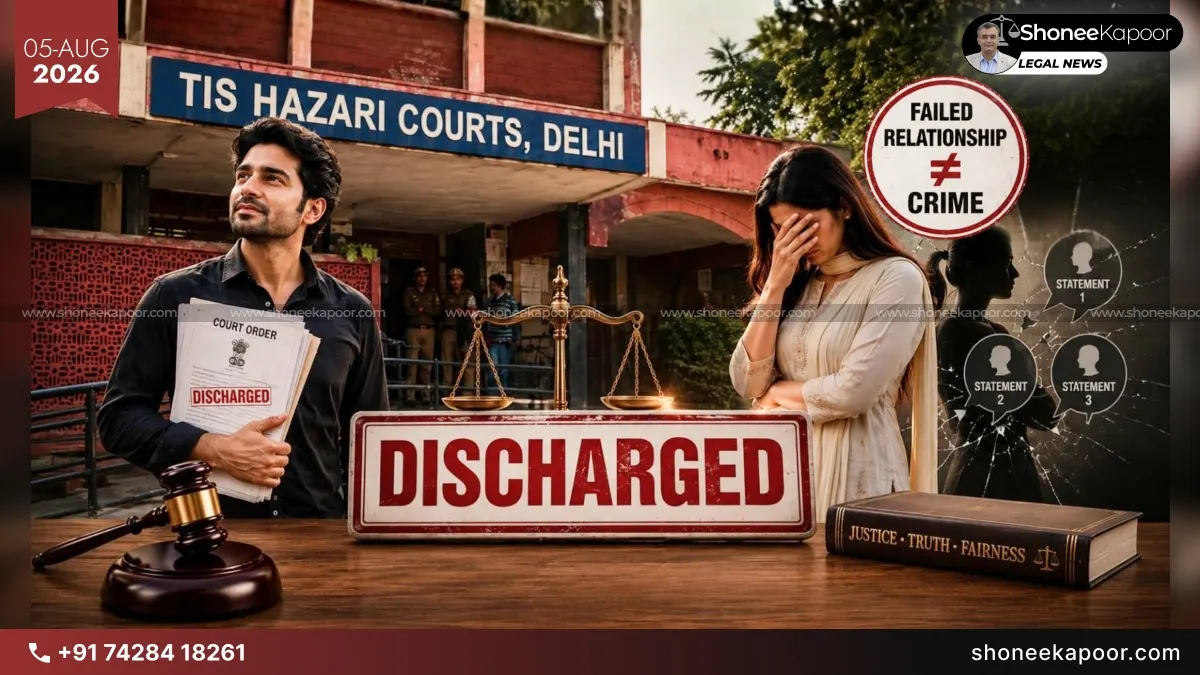
NEW DELHI: A breakup is not proof of a crime. For a promise-to-marry prosecution under Section 69 BNS, the real question is not merely whether marriage eventually happened. The allegation must disclose that the promise was made without any intention of fulfilling it and that sexual intercourse followed through that deceit.
Section 69 specifically covers sexual intercourse which does not amount to rape, and carries imprisonment which may extend to 10 years plus fine.
That distinction is where a properly drafted discharge application can become decisive.
First Understand This: “It Was Consensual” Is Not Enough
Many accused men make one basic mistake: they argue only that the relationship was consensual.
That does not automatically defeat Section 69.
Section 69 itself deals with sexual intercourse not amounting to rape. Therefore, the defence must attack the alleged deceit:
- Was there actually a promise to marry before the sexual relationship?
- Was that promise dishonest from the very beginning?
- Does the prosecution material show that the relationship occurred because of that promise?
- Or does the record show a genuine relationship which subsequently failed?
The law punishes a fraudulent promise—not every relationship that ends without marriage.
Which Provision Governs Discharge?
Section 69 BNS is cognizable, non-bailable and triable by the Court of Session.
Therefore, after commitment of the case to the Sessions Court under Section 232 BNSS, the accused may seek discharge under Section 250 BNSS.
Section 250 expressly allows the accused to file the discharge application within 60 days from the date of commitment. If, after considering the case record and hearing both sides, the Judge finds no sufficient ground to proceed, the accused must be discharged with reasons recorded.
Do not confuse the provisions:
Section 250 BNSS = Discharge
Section 251 BNSS = Framing of Charge
5 Strong Grounds For Discharge In A Section 69 BNS Case
1. The Alleged Marriage Promise Came After The First Physical Relationship
This can strike directly at causation.
If the prosecution's own statement shows that physical relations had already occurred before the alleged marriage promise, ask the obvious legal question:
How could a later promise have induced an earlier sexual act?
A Delhi Sessions Court applied precisely this reasoning in State v. X, Case No. 822/25, decided on 29 July 2026. The complainant's versions differed materially on whether the alleged promise came before or after the first physical relationship.
2. FIR, Section 183 BNSS Statement And MLC Tell Different Stories
Do not waste a discharge application arguing every factual dispute.
Find contradictions that destroy an essential ingredient of Section 69.
In State v. X, the court found three materially conflicting versions regarding the timing and existence of the alleged promise: one in the complaint/FIR, another in the Section 183 BNSS statement and another in the medical history. The court found that these contradictions went to the foundation of the charge and did not create the required “grave suspicion.”
The accused was ultimately discharged under Sections 69 and 209 BNS.
A trial should test evidence. It should not be ordered merely because an accusation exists.
3. The Prosecution Record Itself Shows Genuine Intention To Marry
Engagement, meetings between families, fixing a marriage date, marriage preparations or similar circumstances can be important where they form part of the prosecution record.
In Neelesh Ramchandani & Ors. v. State of Uttar Pradesh & Ors., the Allahabad High Court examined a Section 69 BNS FIR in which the parties had become intimate, got engaged, their families had discussed marriage and even a marriage date had been fixed.
The High Court put the principle sharply:
Section 69 “punishes deceit and not disappointment.”
Finding no false promise or deceitful means, the Court quashed the FIR to the extent of Section 69 BNS.
4. A Genuine Promise That Later Failed Is Not The Same As A False Promise From Day One
The Supreme Court has repeatedly drawn this distinction in the earlier IPC false-promise-to-marry jurisprudence.
In Nitin B. Nikhare v. State of Maharashtra, decided on 21 January 2025, the prosecution's recorded position was that the woman entered the sexual relationship because of the promise of marriage.
The Supreme Court nevertheless reiterated that two elements were crucial in a false-promise rape case:
- the accused had no intention of fulfilling the promise from the beginning; and
- the false promise had a direct bearing on consent.
Finding that the initial promise was not shown to have been made in bad faith and that later circumstances prevented its fulfilment, the Supreme Court quashed the proceedings.
These were IPC rape proceedings, not a direct Section 69 BNS prosecution, but the reasoning on dishonest intention at inception is highly relevant because Section 69 now expressly uses the requirement of a promise made without intention to fulfil it.
5. A Relationship Turning Sour Cannot Automatically Supply The Missing Criminal Intent
In Amol Bhagwan Nehul v. State of Maharashtra, 2025 INSC 782, the Supreme Court again found no material showing that the marriage promise was false from the beginning.
The Court held that a consensual relationship subsequently turning sour cannot by itself justify setting the criminal machinery in motion on the theory of a false promise to marry. The criminal proceedings were quashed.
Again, this arose under the IPC, but the distinction between initial deception and subsequent failure remains highly important while testing the ingredients now expressly contained in Section 69 BNS.
How I Would Structure A Section 250 BNSS Discharge Application
Do not write a 100-page emotional defence.
Build it around the prosecution's own failure:
First: reproduce the exact ingredients of Section 69 BNS.
Second: create a short chronology showing the alleged promise, first physical relationship, subsequent relationship, engagement/family involvement and breakup.
Third: compare the FIR, Section 180 statements, Section 183 statement, MLC and material accompanying the charge-sheet.
Fourth: identify contradictions concerning the promise, its timing and intention at inception.
Fifth: argue that even if the prosecution material is taken at face value, there is no sufficient ground to proceed under Section 69.
This is important because discharge is not a mini-trial. The Supreme Court reiterated in Sarla Gupta v. Directorate of Enforcement, 2025 INSC 645 that at the stage of framing charge, the court ordinarily considers the material forming part of the charge-sheet; an accused cannot simply convert the charge stage into a defence-evidence trial.
That is why the strongest discharge application usually destroys the case using the prosecution's own papers.
The Real Test
A Section 69 case should not survive merely on this sequence:
Relationship → Sex → Breakup → No Marriage → Criminal Trial
The missing legal question is:
Was the promise dishonest when it was made?
If the prosecution's own record cannot generate sufficient ground to believe that the accused never intended to marry when the promise was allegedly made—and the material instead shows a genuine relationship, changing circumstances or fundamental contradictions—Section 250 BNSS should be invoked before the accused is forced through a full criminal trial.
An allegation can start a criminal case.
It should not automatically be enough to justify years of trial.
FAQs
1. Is Section 69 BNS bailable?
No. It is cognizable, non-bailable and triable by a Court of Session.
2. Which section is used for discharge in a Section 69 case?
Section 250 BNSS. Section 251 BNSS deals with framing of charge.
3. When should a discharge application be filed?
Section 250 BNSS provides a 60-day period from the date of commitment of the case for the accused to prefer the discharge application.
4. Does failure to marry automatically constitute Section 69 BNS?
No. The statute requires a promise made without intention of fulfilling it; courts distinguish initial deceit from a genuine relationship that later fails.
5. Can contradictions in the woman's statements result in discharge?
Yes, where they are fundamental and destroy an essential ingredient of the offence. In State v. X, contradictions concerning when the alleged promise was made contributed directly to discharge under Section 69 BNS.
LEGAL DISCLAIMER
This article is for legal education and general information. Discharge depends on the FIR, charge-sheet and evidence collected in each case. Supreme Court decisions discussed above concerning Sections 376/417 IPC are cited for their false-promise and intention-at-inception principles and should not be misrepresented as direct judgments under Section 69 BNS.
Related Reading
 Latest News
Wife Ended Pregnancy Without Husband’s Consent, Legal Action After 6 Years: Rajasthan Case Raises Serious Questions About Husband’s Rights
 Latest News
BJP MP Brij Bhushan Acquitted | “Wrestlers’ Sexual Harassment Case Was False, Political And Fabricated”: Delhi Court
 Latest News
Tamil Nadu CM Vijay’s Wife Sangeetha Withdraws Divorce Plea After Alleging ‘Extramarital Affair’ — Major Twist In High-Profile Case
 Latest News
Share Your Thoughts
Comments are moderated before publication.