
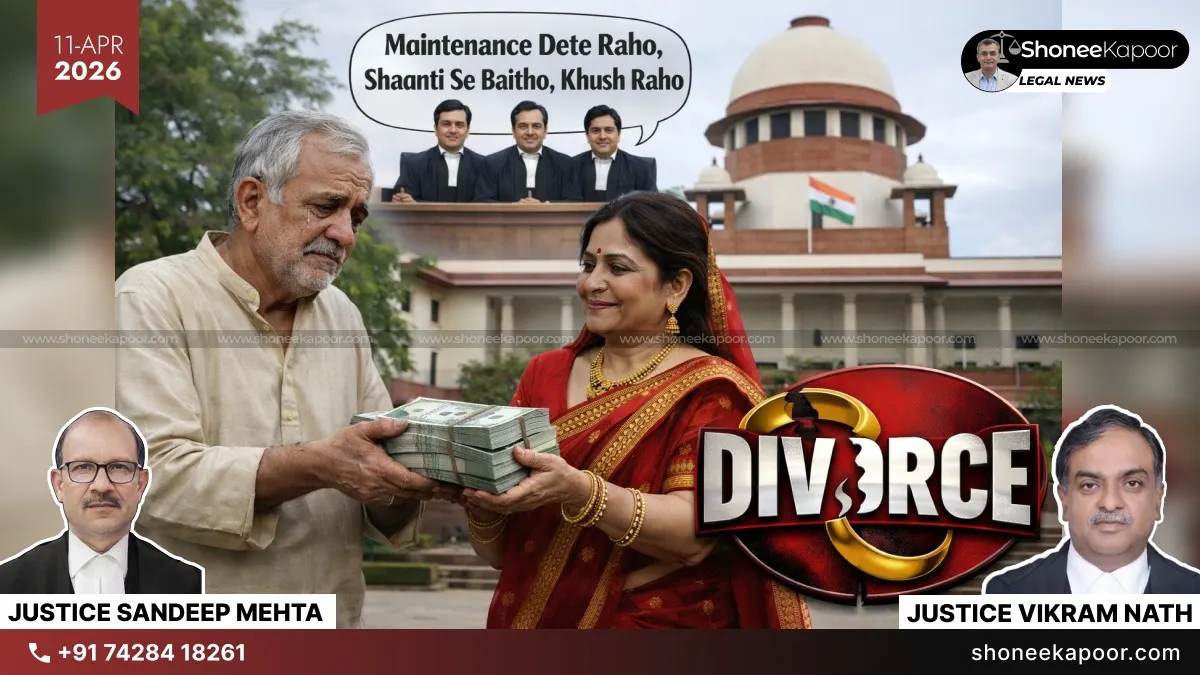
Maintenance Dete Raho, Shaanti Se Baitho, Khush Raho: Supreme Court Tells Husband Living Away from Wife for 16 Years, Refuses His Divorce Plea

Curated by NEWS DESK
Editorial DeskCan a husband be denied divorce even after 16 years of separation and paying ₹15,000 per month as maintenance? Why did the Supreme Court say “keep paying ₹15,000 and be happy” instead?
NEW DELHI: The Supreme Court of India has refused to grant divorce to a 54-year-old man who has been living separately from his wife for the past 16 years and paying ₹15,000 per month as maintenance.
The man approached the Court seeking dissolution of marriage, citing long separation and “temperamental issues” between him and his wife.
During the hearing, the husband’s counsel submitted:
“Separation for 16 years, I am paying ₹15,000 maintenance. Kindly grant me divorce,”
requesting relief based on the prolonged breakdown of the marriage.
However, the wife opposed the divorce and expressed willingness to resume cohabitation. Her counsel told the Court:
“I have told him I am ready to live with him,”
indicating that she did not want the marriage to end.
The Bench of Justice Vikram Nath and Justice Sandeep Mehta questioned the husband on why he was unwilling to live with his wife and asked,
“Keep your wife with you. What is the problem?”
Despite this, the husband maintained that reconciliation was not possible due to long-standing differences.
On the issue of maintenance, the husband highlighted his financial constraints, stating:
“I don’t have money. My salary is Rs 65,000. There is no pension. I am 54 years old.”
He argued that the monthly payment was a burden considering his income and future uncertainty.
The Supreme Court, however, was not convinced. It observed that the amount being paid was minimal in today’s economic conditions and remarked that Rs 15,000 is “nothing these days”.
The Bench further stated that if the husband wanted divorce, he should come forward with a reasonable proposal for permanent alimony. It orally observed:
“Rs 15,000 is hardly anything these days. If you come up with an offer for permanent alimony, we could still consider granting divorce. Otherwise, shaanti se baitho, dete raho Rs 15,000, khush raho”.
In a more direct remark, the Court told the man:
“Shaanti se baithe raho, dete raho Rs 15,000. Khush raho.”
The case arises from a challenge to a High Court order, with the husband seeking final separation after more than a decade and a half of living apart. It was also noted that the couple has no children and that the wife is currently residing with her mother.
The matter has been listed for further hearing on April 27, where the Court may consider the issue again if a concrete proposal is presented.
Explanatory Table – Relevant Laws & Legal Principles
| Law / Provision | Legal Concept | Explanation in This Case | Practical Impact |
| Hindu Marriage Act, 1955 – Section 13(1)(ia) | Cruelty as ground for divorce | Husband cited “temperamental issues” but no strong judicial finding of cruelty recorded | Courts require strict proof; mere incompatibility often insufficient |
| Hindu Marriage Act, 1955 – Section 13(1)(ib) | Desertion (2+ years) | Despite 16 years separation, wife’s willingness to return weakens desertion claim | Long separation alone not automatically treated as desertion |
| Irretrievable Breakdown of Marriage (Article 142 – SC Powers) | Equitable divorce by Supreme Court | Not exercised here; Court insisted on settlement/alimony | Shows discretionary and inconsistent application |
| Section 125 CrPC (now BNSS equivalent provisions) | Maintenance to wife | ₹15,000 monthly maintenance already being paid | Maintenance continues regardless of marital breakdown |
| Permanent Alimony – Section 25 HMA | Lump sum/settlement for divorce | Court suggested divorce possible only with “reasonable proposal” | Financial settlement becomes gateway to divorce |
| Judicial Discretion Principle | Court’s equitable power | Court prioritized continuation of marriage over breakdown | Leads to prolonged litigation burden |
| Burden of Proof in Matrimonial Cases | Requirement of evidence | Husband’s claims not found sufficient at this stage | High threshold at final stage despite long separation |
Key Takeaways
- Even 16 years of separation is not treated as sufficient ground for divorce if one party refuses, showing how exit from marriage is not equally accessible.
- Financial liability continues indefinitely, with courts downplaying ₹15,000 as “hardly anything” without assessing real income pressures.
- Willingness of the wife to return overrides the husband’s clear intent to end a non-functional marriage.
- Divorce is effectively made conditional on offering higher permanent alimony, turning it into a financial negotiation rather than a legal right.
- The system prioritises preservation of marriage on paper, even when the relationship has practically ended, prolonging legal and economic burden on men.
This Could Change Your Case-Get FREE Legal Advice-Click Here!
Disclaimer: The views and opinions expressed in this article are those of the Indian courts and do not necessarily reflect the official policy or position of “ShoneeKapoor.com” or its affiliates. This article is intended for informational and educational purposes only. The content provided is not legal advice, and viewers should not act upon this information without seeking professional counsel. Viewer discretion is advised.
Related Articles
Family Courts Refuse My RTI To Reveal Divorce Data: Is Transparency Selective When It Comes to Men?
Family Courts have refused to provide year-wise divorce and alimony statistics under the RTI Act, citing technical gr...
Can an Educated Wife Claim Maintenance from Her Husband? The Legal Reality No One Explains
Indian courts recognise education and earning capacity, yet husbands are still routinely ordered to pay maintenance.I...
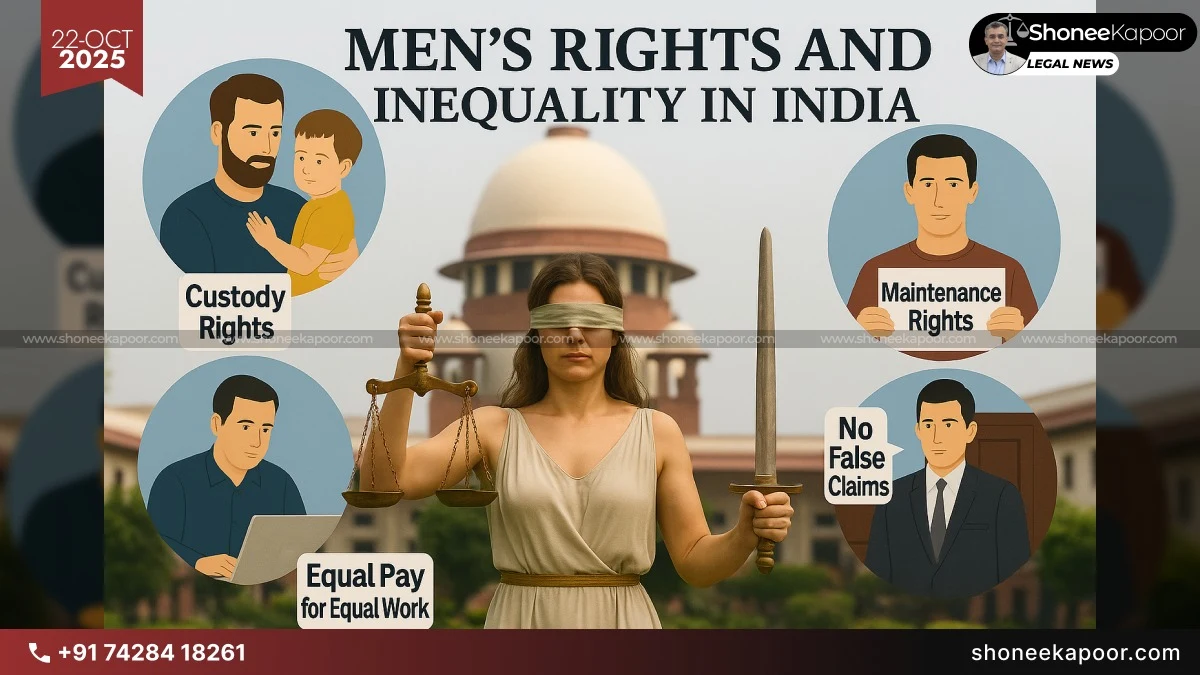
Unheard Voices: Understanding Men’s Rights and Legal Inequality in India
India speaks proudly of women’s empowerment but ignores the men who suffer in silence. With rising false accusations,...
Relevant Judgements
Can an NRI Husband Be Forced to Pay Maintenance in India? Supreme Court Rules Explained for Overseas Indian Men
Living abroad does not automatically protect an NRI husband from maintenance claims in India.But can Indian courts pa...
Share Your Thoughts
Comments are moderated before publication.