
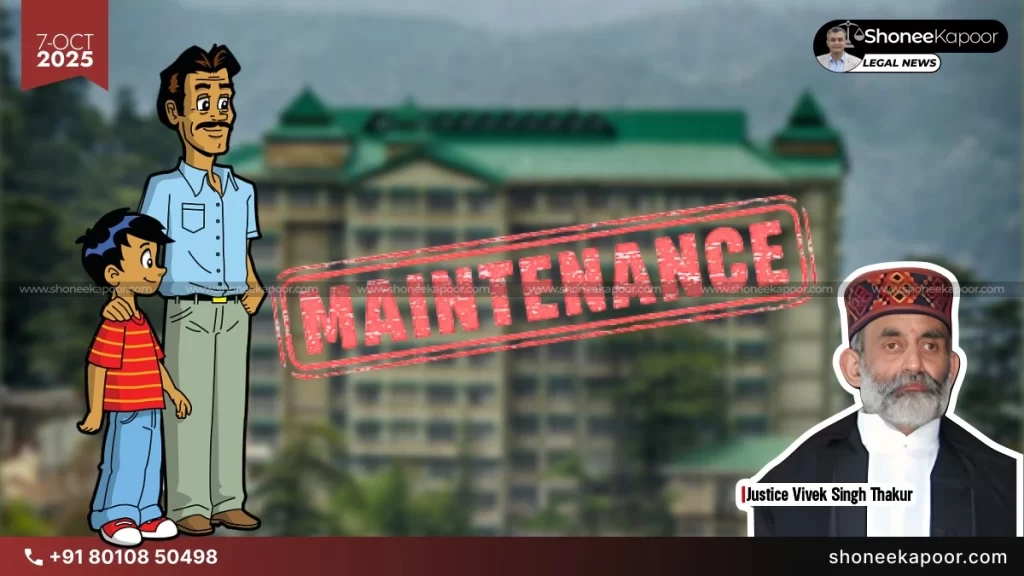
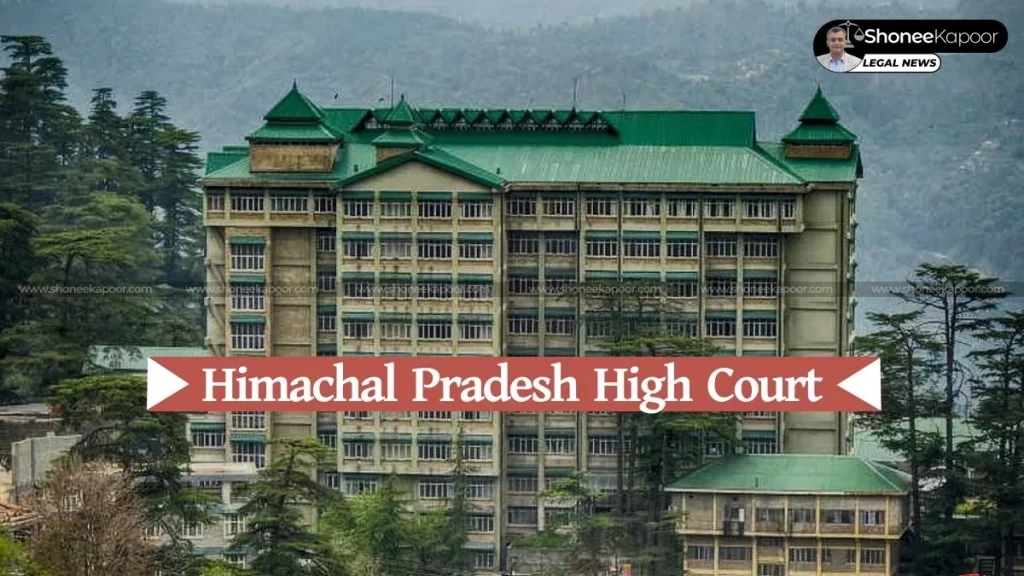
Himachal Pradesh High Court ruled that though legal maintenance under Section 125 CrPC ends at majority, a father’s moral duty to support his children — especially during education — continues. The Court partly allowed the children’s plea for enhanced maintenance.
SHIMLA: The Himachal Pradesh High Court has delivered a significant ruling on the responsibility of fathers toward their children, even after they turn 18. The Court clarified that though legal entitlement to maintenance paid under Section 125 of the Code of Criminal Procedure (CrPC) ends when a child becomes a major, a father’s moral obligation to support his children continues — particularly when they are still studying and need financial help.
The judgment was pronounced by a Division Bench of Justice Vivek Singh Thakur and Justice Sushil Kukreja. The case was filed by two children challenging the Family Court at Sarkaghat, which had denied their request for enhanced maintenance from their father while allowing an increase only for their mother.
Earlier, the Family Court had dismissed the children’s plea for more maintenance, saying that since they had attained majority, they were no longer entitled to financial support under Section 125 CrPC. However, the children argued that they were still dependent students — the daughter pursuing a PhD and the son studying B.Tech — and that their studies were being affected due to lack of funds.
The High Court traced the background of the case, noting that the dispute began back in 2012, when a magistrate first granted maintenance of ₹2,000 per month to each — the mother and two children. This was later enhanced to ₹3,000 in 2015 by the Additional Sessions Judge, and then ₹4,000 in 2017 after a Lok Adalat settlement.
In 2018, the mother and children again sought enhancement under Section 127 CrPC, citing the rise in living costs and the father’s improved financial condition. However, the Family Court only increased the mother’s allowance to ₹8,000 per month, rejecting the children’s claims.
The High Court, after reviewing the records, found that the son was still a minor when the fresh application was filed on July 2, 2018, and that he attained majority only on March 17, 2020. Therefore, he was entitled to enhanced maintenance until that date.
The Bench accordingly directed the father to pay the son ₹8,000 per month from July 2, 2018, to March 17, 2020, and to clear all arrears by October 15, 2025.
The Court also clarified that if the father had continued paying maintenance even after the children became adults, he cannot demand that money back, stating that his moral duty remains intact.
The Bench observed:
“In case respondent No.1 has maintenance paid to petitioners No.1 and 2 even after attaining the age of majority by them, even then, he shall not be entitled to recover the same or adjust it against maintenance payable to either of child or proforma respondent No.2 because being a father, even if, he has no legal duty, but has a moral obligation and duty as a father to ensure maintenance to his children, particularly, when they are at the verge of completing their education as any order to refund the amount paid in excess to the children would hamper the future prospects of the petitioners.”
The Court made it clear that while the legal right under Section 125 CrPC and the new Section 144 of the Bharatiya Nagarik Suraksha Sanhita (BNSS) applies only to minor children or major children with disabilities, fathers still carry a moral duty to assist their children’s education and growth.
Regarding the daughter’s plea, the High Court upheld the Family Court’s view that she was not legally entitled to continued maintenance under Section 125 CrPC since she was already a major and not disabled. However, it added that under the Hindu Adoptions and Maintenance Act, an unmarried daughter unable to sustain herself could still claim maintenance from her father, even after 18.
Finding “no infirmity” in the Family Court’s denial of increased maintenance to the daughter, the High Court partly allowed the revision petition — approving enhanced maintenance for the son while upholding the mother’s earlier increase and protecting the amounts already paid.
Finally, the Court clarified that the rejection of the children’s claim under Section 125 CrPC does not stop them from seeking financial support or property rights under other applicable laws.
Explanatory Table of Laws & Sections Mentioned in the Case
| Law / Statute | Section | Provision Summary | Application / Observation in This Case |
| Code of Criminal Procedure, 1973 (CrPC) | Section 125 | Provides for maintenance to wives, children, and parents unable to maintain themselves. Applies only to minor children and major children with disabilities. | The Family Court denied enhanced maintenance to the children after they attained majority, holding that Section 125 CrPC does not cover major children without disabilities. |
| Code of Criminal Procedure, 1973 (CrPC) | Section 127 | Allows alteration (increase or decrease) of maintenance allowance if there is a change in circumstances. | The mother and children filed for enhancement under this section citing inflation and the father’s improved financial position. |
| Bharatiya Nagarik Suraksha Sanhita, 2023 (BNSS) (new criminal procedure code replacing CrPC provisions) | Section 144 | The new version of Section 125 CrPC under the BNSS — it also provides maintenance to wives, minor children, and dependent parents, with similar limitations. | The Court referred to Section 144 BNSS, reaffirming that maintenance rights are limited to minors and differently-abled major children. |
| Hindu Adoptions and Maintenance Act, 1956 (HAMA) | Section 20 | States that a Hindu is bound to maintain his or her legitimate or illegitimate children during minority; however, an unmarried daughter unable to maintain herself can claim maintenance even after attaining majority. | The Court mentioned that though the daughter cannot claim under CrPC/BNSS, she may still claim maintenance under Section 20 HAMA if she is unmarried and dependent. |
| Judicial Principle / Moral Obligation | (Not codified) | Moral responsibility of a father to support children beyond the age of majority, especially during education, even if not legally enforceable. | The Court emphasized this as a guiding principle — stating: “Even if he has no legal duty, he has a moral obligation and duty as a father to ensure maintenance to his children, particularly when they are at the verge of completing their education.” |
Case Title: Rishita Kapur and another v. Vijay Kapur and another
Bench: Hon’ble Mr. Justice Vivek Singh Thakur and Hon’ble Mr. Justice Sushil Kukreja
- Criminal Revision (FC) No. 49 of 2024
- Citation: (2025:HHC:31444)
- Court: High Court of Himachal Pradesh, Shimla
- Date of Decision: 12 September 2025
- Judgment Reserved On: 06 August 2025
Counsels
For the Petitioners:
- Mr. Ramakant Sharma, Advocate
- Mr. Parav Sharma, Advocate
For the Respondents:
- Mr. Ashwani Pathak, Senior Advocate, with Mr. Dev Raj, Advocate, for Respondent No.1
- Mr. Rupesh Kumar, Advocate, for Respondent No.2
Case Details
- Petitioners: Rishita Kapur and Suchet Kapur (children of Respondent No.1)
- Respondent No.1: Vijay Kapur (father)
- Respondent No.2 (Proforma): Neelam Kumari (mother)
- Originating Order: Dismissal of application for enhancement of maintenance dated 07.03.2024 by the Additional Principal Judge, Family Court, Sarkaghat, District Mandi, H.P.
- Legal Provisions Involved:
- Section 125 of the Code of Criminal Procedure (CrPC)
- Section 127 of the CrPC
- Section 26 of the Hindu Marriage Act, 1955
- Section 20(2) and (3) of the Hindu Adoptions and Maintenance Act, 1956
- Corresponding Section 144 of the Bharatiya Nagarik Suraksha Sanhita (BNSS)
Key Findings
- Children’s Majority:
- Petitioner No.1 (Rishita) – born on 01.08.1998, attained majority on 01.08.2016.
- Petitioner No.2 (Suchet) – born on 17.03.2002, attained majority on 17.03.2020.
- Maintenance History:
- ₹2,000 per month each awarded on 09.07.2012.
- Enhanced to ₹3,000/month on 20.03.2015 (Revision).
- Further enhanced to ₹4,000/month on 22.07.2017 (Lok Adalat).
- Petition for further enhancement filed on 02.07.2018.
- Family Court enhanced only for mother (Neelam Kumari) from ₹4,000 to ₹8,000/month, denied enhancement for children.
- High Court’s Ruling:
- Found no illegality in denying enhancement to Rishita (already major).
- Found error in denying enhanced maintenance to Suchet (still minor until 17.03.2020).
- Ordered ₹8,000/month for Suchet from 02.07.2018 to 17.03.2020.
- Moral Obligation Observation:
- Even if the father has no legal duty after children attain majority, he has a moral duty to support them, especially during education.
- Any amount paid beyond legal obligation cannot be refunded or adjusted.
- Right to Claim in Estate Preserved:
- Denial of maintenance under Section 125 CrPC does not bar the children from claiming rights in their father’s estate under other laws.
Final Order
- Petition partly allowed:
- Petitioner No.2 (Suchet Kapur) entitled to enhanced maintenance of ₹8,000/month from 02.07.2018 to 17.03.2020.
- No refund or recovery allowed for maintenance paid after majority.
- Petitioners’ claim for maintenance beyond majority rejected.
- All pending applications disposed of.
- Judgment by: Justice Vivek Singh Thakur and Justice Sushil Kukreja
- Dated: 12 September 2025

Disclaimer: The views and opinions expressed in this article are those of the Indian courts and do not necessarily reflect the official policy or position of “ShoneeKapoor.com” or its affiliates. This article is intended for informational and educational purposes only. The content provided is not legal advice, and viewers should not act upon this information without seeking professional counsel. Viewer discretion is advised