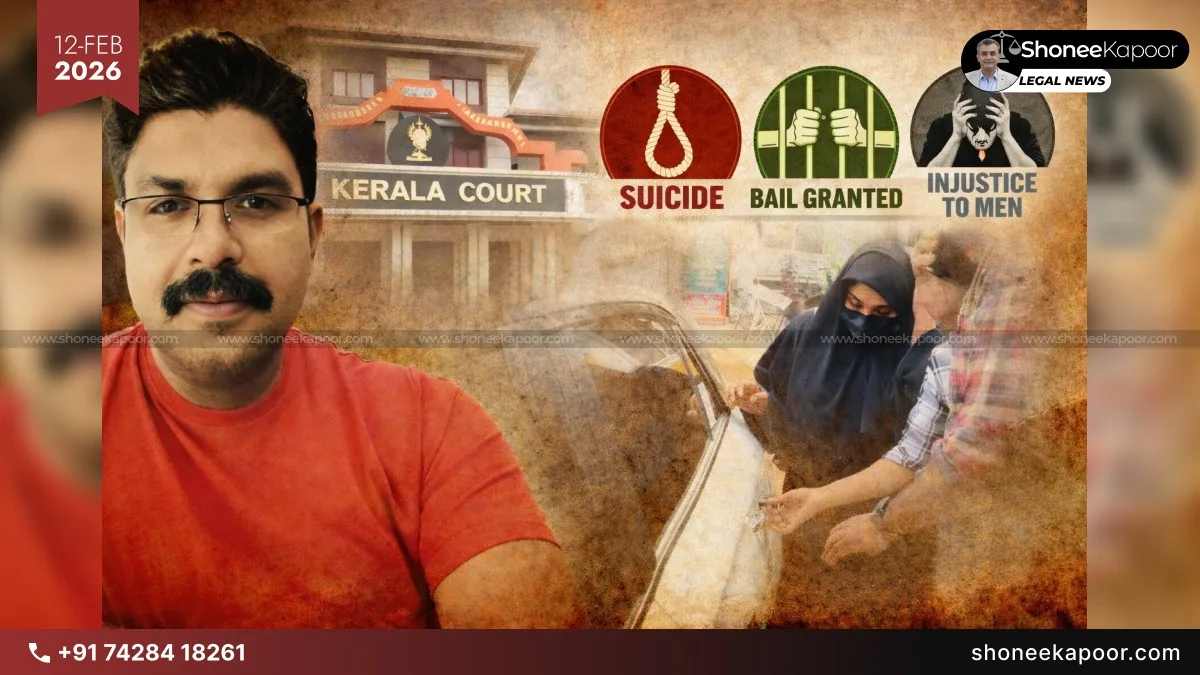
A Kerala sessions court has granted bail to influencer Shimjitha Musthafa in the Deepak suicide case. The court held that further detention was not required as investigation had progressed substantially.
Kozhikode: The sessions court in Kerala has granted bail to social media influencer Shimjitha Musthafa in connection with the alleged abetment of suicide of 42-year-old U Deepak. The case has raised serious legal and social questions about the impact of viral social media accusations and the consequences of public shaming.
The matter arose after Musthafa uploaded videos on her social media accounts alleging that Deepak had behaved inappropriately during a crowded bus journey on January 16. According to the prosecution version, Deepak was standing at the front side of the bus because it was crowded. It is alleged that Musthafa deliberately stood close to him and later shared video clips online claiming that he had inappropriately touched her.
The video quickly went viral and reportedly crossed more than two million views across platforms such as Instagram and Facebook. Following the circulation of the video, Deepak allegedly faced severe online trolling, public humiliation, and social backlash. On January 18, just two days after the incident, Deepak was found dead at his residence. The allegation in the case is that the humiliation and public pressure triggered by the viral video drove him to take the extreme step.
After Deepak’s death, public opinion appeared divided. While some supported Musthafa’s actions, many others questioned the authenticity of the allegations. There were claims circulating that the video did not clearly show any misconduct by Deepak. Allegations also surfaced suggesting that the content may have been uploaded to gain online popularity and viewership.
Deepak’s mother later filed a formal complaint alleging that the accusations made in the video were false and were posted only to gain social media attention. Based on her complaint, the police registered a case against Musthafa under Section 108 of the Bharatiya Nyaya Sanhita, 2023 for abetment of suicide, Section 352 of the BNS for intentional insult with intent to provoke breach of peace, and Section 120(o) of the Kerala Police Act relating to nuisance and violation of public order.
Musthafa was arrested on January 21 and was remanded to judicial custody. Her initial bail plea was rejected by the Judicial First Class Magistrate Court in Kunnamangalam.
Thereafter, she approached the sessions court seeking relief.
The State opposed her bail application, arguing that she had not cooperated during custodial interrogation. However, the sessions court examined the case records and noted that police custody had already been granted for one day on February 5 and that no further request for police custody had been made. The court also observed that non-cooperation was not specifically recorded in the reports submitted before it.
District and Sessions Judge Bindhukumari VS passed the bail order and recorded the following finding:
“Since the investigation has thus progressed to a considerable extent and further detention of the petitioner is not required for the purpose of investigation, I find that the petitioner is entitled to be released on bail.”
The court further observed that the investigation had advanced significantly, statements of key witnesses had already been recorded, and Musthafa’s mobile phone had been seized and sent for forensic examination. It concluded that she cannot be kept in judicial custody indefinitely merely because the forensic report is awaited.
Accordingly, the sessions court granted bail with strict conditions. Musthafa has been directed to appear before the investigating officer on every second and fourth Friday between 10 AM and 11 AM. She has also been warned not to influence witnesses or interfere with the investigation in any manner.
Meanwhile, the matter has taken a wider dimension as a petition filed by the President of the All Kerala Men’s Association is pending before the Kerala High Court. The petition seeks a Crime Branch or CBI investigation into the circumstances surrounding Deepak’s death.
Explanatory Table Of Laws And Sections Involved
| Law / Statute | Section | Offence Description | Legal Meaning in Simple Terms | Relevance in This Case |
| Bharatiya Nyaya Sanhita, 2023 (BNS) | Section 108 | Abetment of Suicide | Applies when a person is accused of provoking, instigating, or intentionally aiding someone to commit suicide. Prosecution must prove clear intention and a direct link between the act and suicide. | Police alleged that the viral video and public humiliation led Deepak to take his life. |
| Bharatiya Nyaya Sanhita, 2023 (BNS) | Section 352 | Intentional Insult with Intent to Provoke Breach of Peace | Covers acts or words that intentionally insult someone in a way that may disturb public peace. | The allegation is that uploading the video and accusations caused public outrage and humiliation. |
| Kerala Police Act | Section 120(o) | Nuisance / Violation of Public Order | Deals with conduct that creates disturbance, nuisance, or disorder affecting public order. | The viral circulation of the video was treated as creating public disturbance and social unrest. |
Case Details
- Case Title: Shimjitha VK v State of Kerala
- Court: Sessions Court, Kozhikode, Kerala
- Presiding Judge / Bench: District and Sessions Judge Bindhukumari VS
- Counsels for the Petitioner: Advocates PV Hari and Sushama M
- Accused: Shimjitha Musthafa (Social Media Content Creator)
- Deceased: U Deepak (42 years old)
- Date of Arrest: January 21
- Date of Alleged Incident: January 16 (Bus Journey)
- Date of Death: January 18
Key Takeaways
- Social media allegations can destroy a man’s reputation overnight, even before any legal finding.
- Viral outrage can translate into real-world humiliation with irreversible consequences.
- Abetment of suicide requires clear legal proof of intention, not emotional narratives.
- Bail jurisprudence recognises that custody cannot be used as punishment before trial.
- Digital accountability is now as important as legal accountability in protecting due process.
This Could Change Your Case-Get FREE Legal Advice-Click Here!
Disclaimer: The views and opinions expressed in this article are those of the Indian courts and do not necessarily reflect the official policy or position of “ShoneeKapoor.com” or its affiliates. This article is intended for informational and educational purposes only. The content provided is not legal advice, and viewers should not act upon this information without seeking professional counsel. Viewer discretion is advised.
