
In a landmark decision, the Delhi High Court held that a wife can file a civil suit seeking damages from her husband’s lover for “Alienation of Affection.” The Court said, “Decriminalising adultery did not create a license to have relationships outside marriage without consequences.”
NEW DELHI: The Delhi High Court has ruled that a spouse can legally sue their partner’s lover for intentionally breaking marriage and seek damages for “Alienation of Affection (AoA).”
The judgment, delivered by Justice Purushaindra Kumar Kaurav, held that such a civil action is maintainable and issued summons to the alleged paramour in a suit filed by Shelly Mahajan against Bhanushree Bahl and her husband.
The wife sought ₹4 crore in damages, claiming she lost her husband’s companionship because of the “active and mala fide conduct” of his alleged lover. The petition was based on the tort of Alienation of Affection, a principle borrowed from Anglo-American law that allows a spouse to sue a third party who wrongfully interferes in a marriage and causes its breakdown.
The Court explained that if a spouse has a “protectable interest in marital consortium, intimacy, and companionship,” then any third party has a “correlative legal duty not to intentionally and wrongfully interfere with that relationship by acts calculated to alienate the affection of a spouse.”
The bench clarified that while India has no statute explicitly recognising this tort, the concept has judicial roots in common law traditions known as “heart-balm” actions. These are civil claims meant to compensate for the emotional and marital damage caused by a third party’s interference.
Justice Kaurav quoted from the Supreme Court’s earlier judgments in Pinakin Mahipatray Rawal v. State of Gujarat and Indra Sarma v. V.K.V. Sarma, where the apex court observed:
“Alienation of affection by a stranger, if proved, is an intentional tort i.e., interference in the marital relationship with intent to alienate one spouse from the other… Both the spouses have a valuable interest in the married relationship, including its intimacy, companionship, support, duties, affection, welfare of children, etc.”
The Delhi High Court further reproduced another key quote from the Indra Sarma case:
“The appellant had entered into this relationship knowing well that the respondent was a married person and encouraged a bigamous relationship. By entering into such a relationship, the appellant has committed an intentional tort… Marriage and family are social institutions of vital importance… Alienation of affection, in that context, is an intentional tort.”
Justice Kaurav emphasised:
“While such claims are rare in India, they are analytically sustainable so long as the plaintiff can prove intentional and wrongful conduct by the defendant, clear causation, and quantifiable injury.”
The Court disagreed with the defendants’ argument that the matter should lie exclusively before the Family Court. It held that this suit was not merely about a marital dispute but about an independent civil wrong:
“The instant lis is wholly regarding civil rights related to tort, and the Civil Court retains the jurisdiction.”
The Court observed that the wife’s right to her husband’s companionship was a legally protectable interest and that any third party who intentionally damages that bond can face civil consequences.
The judgment also drew from the landmark Supreme Court decision in Joseph Shine v. Union of India, which decriminalised adultery. Justice Kaurav, however, made an important clarification that went viral across legal circles:
“The decision in Joseph Shine decriminalised adultery; it did not create a license to enter into intimate relationships beyond marriage, free from civil or legal implications.”
This remark means that although adultery is no longer a criminal offence in India, it can still have civil repercussions — such as compensation claims for emotional or marital loss.
The Court stated that the concept of marriage in Indian law implies sexual exclusivity, and breach of that exclusivity can amount to injury:
“A core and accepted norm of such a union is exclusivity in the intimate sphere between the spouses. Treating marriage analogously to a contract, this norm may be viewed as one of its essential terms.”
While reserving all final findings for trial, the Court concluded that the wife’s case disclosed a valid civil cause of action:
“A civil action for wrongful interference is analytically sustainable… the plaint prima facie discloses a civil cause of action for tortious interference, i.e., Alienation of Affection.”
Justice Kaurav directed that summons be issued to the alleged lover and the husband, allowing them to contest the claim and file written statements within 30 days.
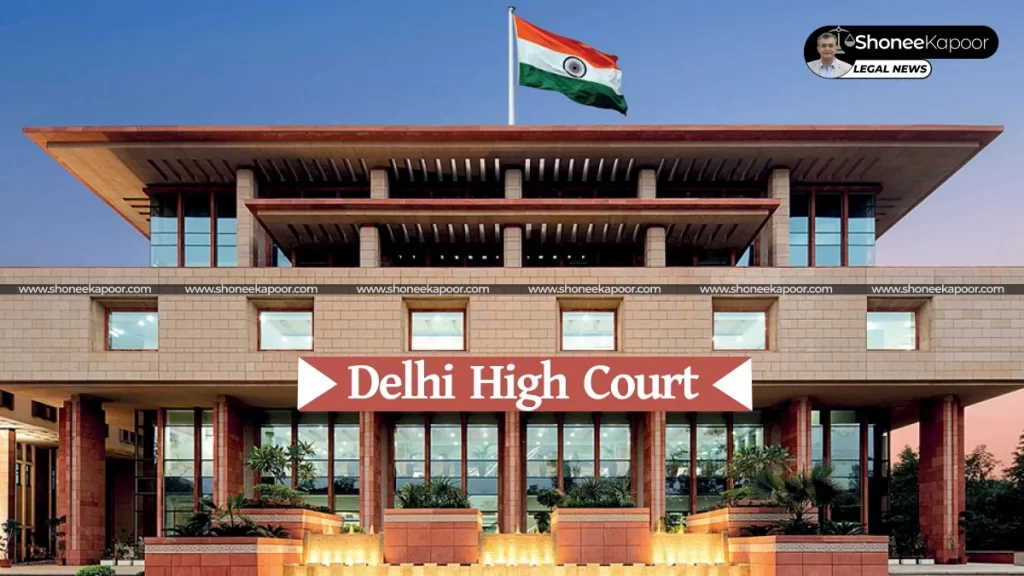
The matter will now proceed to trial, where the Delhi High Court will decide whether compensation should actually be awarded to the aggrieved wife for the alleged interference in her marriage.
Explanatory Table of All Laws & Sections Mentioned
| Law / Section | Provision Summary | Relevance in This Case |
|---|---|---|
| Section 9 CPC (1908) | Grants Civil Courts jurisdiction unless barred by law. | Defendants argued that Civil Court’s jurisdiction is barred; Court held no bar applies — suit maintainable. |
| Order VII Rule 11 CPC | Allows rejection of plaint if barred by law. | Court said the plaint cannot be rejected — defendants may invoke this later. |
| Section 7 (1)(d) Family Courts Act, 1984 | Family Courts handle matters arising out of a marital relationship. | Court held AoA is a civil tort, not a “matrimonial” matter → outside Family Court’s exclusive jurisdiction. |
| Section 13 Hindu Marriage Act, 1955 | Lists grounds for divorce — adultery by spouse is one. | Shows sexual exclusivity is an essential term of marriage; breach may justify divorce and civil injury. |
| Joseph Shine v. Union of India (2019 3 SCC 39) | Decriminalised adultery (Section 497 IPC struck down) as gender-biased. | Court clarified: decriminalised ≠ legalised — civil consequences remain. |
| Pinakin Mahipatray Rawal v. State of Gujarat (2013 10 SCC 48) | Recognised Alienation of Affection as an intentional tort if proved against a stranger. | Delhi HC relied on this to validate AoA as civil cause of action. |
| Indra Sarma v. V.K.V. Sarma (2013 15 SCC 755) | Held that a woman knowingly entering a married man’s life commits an intentional tort of interference. | Strengthened the principle that a spouse may sue a third party for alienating affection. |
| Geeta Anand v. Tanya Arjun (2024 SCC OnLine Del 2327) | DB held Family Court’s scope limited to matrimonial disputes arising from marriage. | Cited to assert that Civil Court has jurisdiction for AoA claims. |
| Leby Issac v. Leena M. Ninan (2005 SCC OnLine Ker 345) | Kerala HC took a broad view of Family Court jurisdiction. | Delhi HC explicitly disagreed with this reasoning. |
| Tanvi Chaturvedi v. Smita Shrivastava (2025 SCC OnLine Del 5712) | Addressed maintainability of adultery-based actions. | Cited by defence; Court found distinguishable. |
| Avneet Kaur v. Sadhu Singh (2022 SCC OnLine Del 4815) | Broad reading of Family Court powers. | Overruled in Geeta Anand; HC followed narrower interpretation. |
| Manita Khurana v. Indra Khurana (2010 SCC OnLine Del 225) | Property disputes among relatives not for Family Court. | Reinforced Civil Court’s jurisdiction logic. |
| Meena Kapoor v. Ayushi Rawal (2020 SCC OnLine Del 2481) | Similar to Manita Khurana; Civil rights outside Family Court. | Followed by Justice Kaurav. |
| Hohfeld’s Analytic Schema (Jurisprudential Theory) | Rights exist only with correlative duties. | Used to explain why a third party may owe a duty not to interfere in marital consortium. |
| Heart-Balm Torts (Anglo-American Common Law) | Civil claims for loss of love, companionship, promise to marry. | Conceptual foundation for AoA tort in India. |
Case Summary
- Case Title: Shelly Mahajan v. Ms Bhanushree Bahl & Anr.
- Case Number: CS(OS) 602/2025 & I.A. 21712-21714/2025
- Court: High Court of Delhi at New Delhi
- Date of Order: 15 September 2025
- Bench / Judge: Hon’ble Mr. Justice Purushaindra Kumar Kaurav
- Plaintiff: Shelly Mahajan (wife)
- Defendant No. 1: Ms Bhanushree Bahl (alleged paramour)
- Defendant No. 2: Husband of the Plaintiff
- Plaintiff’s Counsel: Ms Malavika Rajkotia, Ms Purva Dua & Mr Mayank Grover, Advocates
- Defendant No. 1 Counsel: Mr K.C. Jain, Advocate
- Defendant No. 2 Counsel: Mr Prabhjit Jauhar, Ms Tulika Bhatnagar & Mr Sehaj Kataria, Advocates
- Nature of Case: Civil Suit for Damages — Tort of Alienation of Affection (AoA)
- Damages Claimed: ₹ 4 Crore for loss of companionship & affection
- Relief Sought: Compensation from the alleged paramour for intentional interference in marriage
- Result: Court held that the suit is maintainable and issued summons to defendants
- Next Hearing / Direction: Defendants to file written statements within 30 days; matter before Joint Registrar on 10 Dec 2025
- Viral Quote: “The decision in Joseph Shine decriminalised adultery; it did not create a license to enter into intimate relationships beyond marriage, free from civil or legal implications.”
Disclaimer: The views and opinions expressed in this article are those of the Indian courts and do not necessarily reflect the official policy or position of “ShoneeKapoor.com” or its affiliates. This article is intended for informational and educational purposes only. The content provided is not legal advice, and viewers should not act upon this information without seeking professional counsel. Viewer discretion is advise