
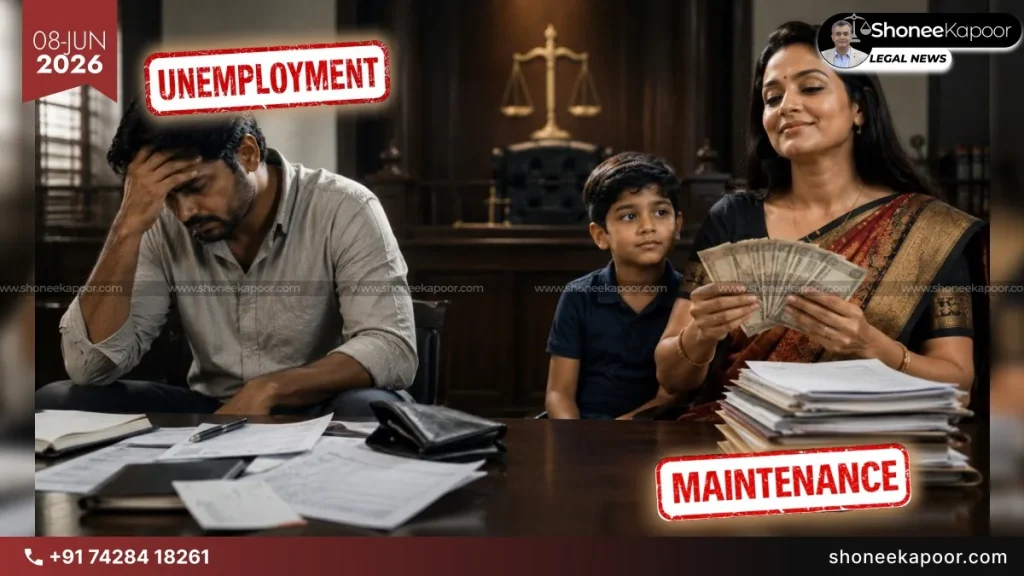
Do failed Domestic Violence allegations and unemployment end a husband’s financial responsibility?
Delhi Court says No, orders ₹6,000 monthly maintenance for minor son
NEW DELHI: A long-running matrimonial dispute that began more than a decade ago led to a Delhi Court examining whether a father could avoid child maintenance by claiming unemployment. Additional Sessions Judge Sheetal Chaudhary Pradhan ultimately held that he could not and directed payment of ₹6,000 per month for the minor son’s upkeep.
The dispute arose from a marriage solemnised in February 2013. The wife alleged that after marriage she was subjected to dowry-related harassment, physical assault and mental cruelty by her husband and his family members. She further claimed that she was forced to leave the matrimonial home during her pregnancy and had been living separately with her son since 2015.
Court records showed that the parties had briefly reunited after entering into a settlement before a Family Court in 2015. They stayed together in a rented accommodation for a few months, but their relationship again broke down, and they started living separately.
The Trial Court had dismissed the woman’s complaint under the Domestic Violence Act in September 2025 after finding that she had failed to establish allegations of domestic violence and economic abuse. Aggrieved by that decision, she challenged the order before the appellate court.
While examining the matter, the appellate court agreed that the allegations of physical assault and cruelty were not supported by medical records or independent evidence. However, the court found that the husband had not provided any financial support for the child for several years.
The court observed:
“It is for the respondent/husband to manage his expenses and merely giving the excuse that he is jobless or that he has other responsibilities… does not absolve him from maintaining his legally wedded wife and the minor son.”
The judge noted that the husband was an able-bodied person and was capable of earning. The court also took note of the fact that the husband had not filed his income affidavit despite being given repeated opportunities before the Trial Court.
The court further observed that the child had remained with the mother since 2015 and that the father had not provided financial assistance for his upbringing. Stressing the legal obligation of both parents, the court said:
“The respondent is equally responsible for maintaining the minor child.”
During the proceedings, it was argued that the wife was educated and therefore not entitled to any monetary relief. The court rejected this contention and clarified that education alone cannot be treated as proof of income.
The court observed:
“The capability to earn and actual earning are two different concepts,”
And noted that the husband had failed to place any convincing material on record to show that the wife was earning enough to maintain herself and the child.
At the same time, the court did not find sufficient evidence to support the allegations of domestic violence, physical cruelty or economic abuse made against the husband. As a result, the wife did not succeed on those allegations. However, the court held that the issue of child maintenance stood on a different footing and required consideration of the welfare of the minor child.
Concluding that the father could not avoid his responsibility towards the child merely by claiming unemployment, the court directed payment of maintenance and held:
“I am of the considered opinion that respondent/ husband is capable of paying a maintenance amount of Rs 6000 to the minor son till he attains the age of majority from the date of present Order.”
Accordingly, the appeal was partly allowed, and the earlier order was modified to the extent of granting maintenance of ₹6,000 per month to the minor son until he attains majority.
EXPLANATORY TABLE: LAWS AND PROVISIONS INVOLVED
| Law / Provision | Purpose | How Applied In This Case |
| Protection of Women from Domestic Violence Act, 2005 (PWDV Act) | Provides protection and relief to women facing domestic violence, including maintenance and residence rights | Wife filed proceedings seeking reliefs under the Act against the husband |
| Monetary Relief (PWDV Act) | Enables financial support for an aggrieved woman and children | Appellate Court granted maintenance for the minor son |
| Domestic Violence | Covers physical, emotional, verbal, sexual and economic abuse | Trial Court and Appellate Court found allegations of domestic violence were not proved |
| Economic Abuse | A recognised form of domestic violence involving financial deprivation | Court found insufficient evidence to establish economic abuse |
| Maintenance of Minor Child | Legal obligation of both parents to support a child | Court directed husband to pay ₹6,000 per month towards the child’s maintenance |
CASE DETAILS
- Case Title: Wife Vs. Husband
- Court: Court of the Additional Sessions Judge, Delhi
- Presiding Judge: Additional Sessions Judge Sheetal Chaudhary Pradhan
- Date of Order: 2 June 2026
- Nature of Proceedings: Appeal under the Protection of Women from Domestic Violence Act, 2005
- Court’s Order: ₹6,000 per month maintenance for minor son
KEY TAKEAWAYS
- Allegations alone should never be treated as proof; every claim must withstand scrutiny and be supported by evidence.
- A man can be cleared of serious allegations yet still remain legally responsible for supporting his child.
- Child maintenance and allegations of domestic violence are separate issues and should not be mixed together.
- Financial responsibility towards children continues even when a marriage breaks down or disputes remain unresolved.
- Fair justice requires protecting children’s interests while ensuring that unproven allegations do not become automatic findings against men.
This Could Change Your Case-Get FREE Legal Advice-Click Here!
Disclaimer: The views and opinions expressed in this article are those of the Indian courts and do not necessarily reflect the official policy or position of “ShoneeKapoor.com” or its affiliates. This article is intended for informational and educational purposes only. The content provided is not legal advice, and viewers should not act upon this information without seeking professional counsel. Viewer discretion is advised.