
Can vague and repeated allegations be used again to reopen closed disputes and put continued legal pressure on a man?
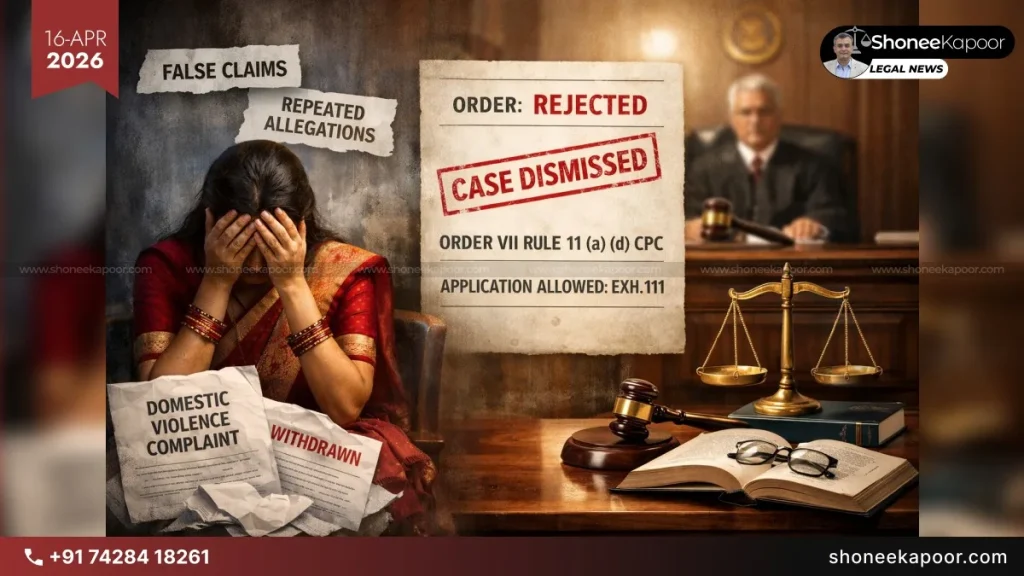
The Nagpur Court held that a fresh domestic violence complaint cannot survive without new incidents, specific allegations, and a valid fresh cause of action.
MAHARASHTRA: In an order dated 09 March 2026, the Nagpur Court, presided over by Judge Smt. D.M. Shinde, dismissed a fresh domestic violence complaint filed by the wife, granting substantial relief to the husband.
The court held that once a matter has been settled and withdrawn, the same old allegations cannot be repeated again unless there is a fresh and genuine cause of action.
The dispute started when the wife had earlier filed a domestic violence case in 2018. That case was later settled before the High Court in 2021 and withdrawn. Despite that settlement, a new complaint was filed later based largely on the same old allegations.
The husband opposed the fresh case and argued that there were no new incidents after the settlement. He said the case was being used as a pressure tactic in an ongoing property dispute. The court examined the complaint in detail and found no clear, recent, or specific acts of domestic violence after the earlier compromise.
The judge explained the importance of a valid legal foundation and stated:
“The cause of action in a domestic violence is important aspect as it serves the essential foundation, which establish the legal basis for the complainant to ensure the courts jurisdiction, maintainability of petition and granting of relief.”
The court further said that vague claims without facts cannot sustain such proceedings.
After reviewing both the old and fresh complaints, the court noted:
“Lots of contents in earlier complaint are reproduced in present complaint in elaborated manner.”
It then held that allegations raised before withdrawal in 2021 had already ended legally and could not be revived again.
On settlements, the court observed:
“Once the settlement is reached, parties are bound by its terms and the original cause of action is extinguished. It means the party cannot re-litigate the same.”
This became one of the key reasons for dismissal of the fresh complaint.
The court also found that the parties had been living separately since 2018 and there was no continuing domestic relationship required under the Domestic Violence Act. The judge observed:
“Domestic relationship is important ingredient of domestic violence definition and if it is absent the complaint is not tenable.”
Regarding allegations in the complaint, the court found them vague and unsupported. It stated:
“No incident of domestic violence is described and narrated. Mere statement of the complainant that non-applicant No.1 has harassed, mentally tortured, and economically abused is not sufficient.”
The court also clarified that disputes regarding ownership or possession of property cannot automatically become domestic violence matters and proper civil remedies must be used for such claims.
Finally, the court allowed the husband’s application filed under Exh.111 and rejected the complaint under Order VII Rule 11 of the Civil Procedure Code. The interim maintenance order dated 02.08.2023 was also vacated, and all proceedings were closed.
Explanatory Table: Laws And Sections Involved
| Law / Section | Purpose | How Applied in This Case |
| Section 12, DV Act | Main provision to file domestic violence complaint | Wife filed fresh complaint under this section |
| Section 17, DV Act | Right to reside in shared household | Relief claimed in complaint |
| Section 18, DV Act | Protection orders against abuse | Sought as part of reliefs |
| Section 19, DV Act | Residence orders | Wife sought residence-related relief |
| Section 20, DV Act | Monetary relief / maintenance | Maintenance and expenses claimed |
| Section 22, DV Act | Compensation for injury/mental distress | Compensation sought |
| Section 23, DV Act | Interim and urgent temporary orders | Basis of interim maintenance order later vacated |
| Section 3, DV Act | Defines domestic violence | Court examined whether allegations fit legal definition |
| Section 14, DV Act | Counselling provision | Mentioned in complaint; wife said no scope for counselling |
| Section 27, DV Act | Territorial jurisdiction | Wife claimed Nagpur/Mumbai jurisdiction |
| Order VII Rule 11(a), CPC | Reject complaint if no cause of action | Court rejected complaint on this ground |
| Order VII Rule 11(d), CPC | Reject complaint if barred by law | Used while dismissing complaint |
| Order XXIII Rule 1, CPC | Withdrawal/abandonment after withdrawal of suit | Court discussed effect of earlier withdrawn case |
| Section 125(3), CrPC | Recovery of maintenance arrears | Wife stated separate recovery proceedings filed |
| Section 498-A, IPC | Cruelty by husband/relatives | Wife asked for FIR direction |
Case Details
- Case Title: Kusum Vs. Satish
- Case Number: Cri.M.A. No. 5206/2022
- Application Decided: Exh.111
- Court: Civil Judge (Senior Division), Nagpur
- Presiding Judge: Smt. D.M. Shinde
- Date of Order: 09 March 2026
- Counsels:
- Earlier Proceedings Counsel: Adv. Anima Maroli Kollanandy
- Withdrawal Stage Counsel: Adv. Shilpa Ashar
Key Takeaways
- Once a dispute is settled and legally closed, the same allegations cannot be reopened without any fresh and specific incident.
- Vague claims like “mental harassment” or “economic abuse” without clear facts are not enough to sustain serious legal proceedings.
- Living separately for years weakens claims of an ongoing domestic relationship, which is essential for such cases.
- Property or financial disputes cannot be misused by converting them into allegations of domestic violence.
- Repeated litigation on the same facts creates unnecessary legal pressure on men, and such misuse can be challenged and set aside when properly contested.
This Could Change Your Case-Get FREE Legal Advice-Click Here!
Disclaimer: The views and opinions expressed in this article are those of the Indian courts and do not necessarily reflect the official policy or position of “ShoneeKapoor.com” or its affiliates. This article is intended for informational and educational purposes only. The content provided is not legal advice, and viewers should not act upon this information without seeking professional counsel. Viewer discretion is advised.