
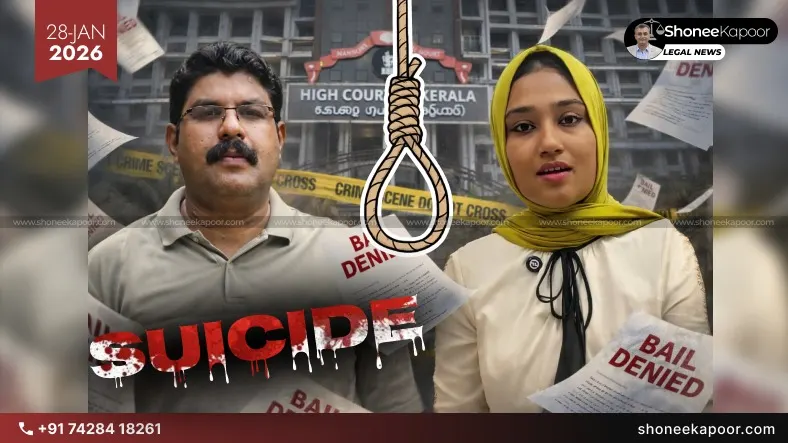
Deepak’s Viral Bus Video & Suicide | Kerala Court Denies Bail To Woman After Man She Accused Of Sexual Harassment Dies By Suicide

Written and analysed by Shonee Kapoor
Legal Consultant, Author & Men's Rights ActivistA Kerala court has denied bail to a woman accused of abetment of suicide after a man she publicly accused in a viral video ended his life.
The case raises serious questions on social media trials, unchecked allegations, and the silent cost borne by men before due process.
Deepak Viral Bus Video & Suicide:: A Kerala court has refused to grant bail to a woman accused of abetting the suicide of a man she had earlier accused of sexual harassment in a viral social media video.
The order was passed by the Judicial First Class Magistrate, Kunnamangalam on Tuesday (27 January), denying bail to Shimjitha Musthafa, who has been booked under Section 108 of the Bharatiya Nyaya Sanhita (BNS), 2023, for the alleged abetment of suicide of U. Deepak, a salesman.
The order was pronounced by Smt. Athira M, Judicial First Class Magistrate, Kunnamangalam.
Shimjitha Musthafa is accused of abetment of suicide of Deepak, whom she had accused of sexual misconduct during a bus journey in Kannur. According to the case records, Deepak died by suicide on January, 18, shortly after a video was recorded and uploaded on social media by Shimjitha, in which she alleged that Deepak had touched her inappropriately on a crowded bus.
The video clip spread rapidly across multiple social media platforms, drawing widespread public attention and strong reactions. Deepak’s family has alleged that the intense online harassment and public vilification that followed the circulation of the video pushed him into severe mental distress, ultimately leading him to take his own life.
Based on a complaint submitted by Deepak’s family, the police registered a First Information Report (FIR) on 19 January. Shimjitha Musthafa was arrested on January 21 from the Kozhikode Medical College, where she was reportedly present at the time of arrest.
After her arrest, Shimjitha sent a complaint by email to the Payyannur Police on January 22. In her complaint, she reiterated her allegation of sexual misconduct, stating that she was sexually harassed while travelling on a private bus from Payyannur Railway Station to the Bus Stand on January 16.
The court, while considering the bail plea, took note of the serious allegation of abetment of suicide and the sequence of events following the public circulation of the video. The denial of bail reflects judicial concern over the consequences of public accusations made outside formal legal processes, especially when such actions are followed by irreversible loss of life.
This case highlights a troubling reality of the digital age, where allegations aired on social media can instantly turn into public verdicts, leaving little room for investigation, defence, or due process. While allegations of misconduct must always be taken seriously and investigated lawfully, the case also underlines how unverified public shaming can destroy lives, reputations, and families before any court determines the truth.
Explanatory Table: Laws and Sections Involved
| Law / Statute | Section | What the Law Covers | How It Applies in This Case |
| Bharatiya Nyaya Sanhita, 2023 | Section 108 | Punishment for abetment of suicide | Woman has been charged for allegedly abetting suicide after posting a viral video that led to public harassment of the deceased |
| Code of Criminal Procedure | Bail provisions | Regulates grant or refusal of bail | Bail was denied considering the gravity of allegations and the causal link alleged between actions and suicide |
Case Details
- Case Title: State of Kerala vs. Shimjitha Musthafa
- Court: Judicial First Class Magistrate, Kunnamangalam
- Bench / Presiding Judge: Smt. Athira M, Judicial First Class Magistrate
- Date of Order: 27 January
- FIR Date: 19 January
- Date of Arrest: 21 January
- Police Station Involved: Payyannur Police
Key Takeaways
- Social media accusations can destroy a man’s life before any investigation, trial, or finding of guilt takes place.
- Public shaming and online outrage often replace due process, leaving the accused with no legal or social protection.
- Suicide linked to viral allegations exposes the silent mental health cost men pay when branded guilty in public.
- Courts are increasingly recognising that reckless public allegations can amount to criminal liability when they lead to irreversible harm.
- Justice must protect genuine victims, but it must also safeguard innocent men from trial by internet and mob pressure.
This Could Change Your Case-Get FREE Legal Advice-Click Here!
Disclaimer: The views and opinions expressed in this article are those of the Indian courts and do not necessarily reflect the official policy or position of “ShoneeKapoor.com” or its affiliates. This article is intended for informational and educational purposes only. The content provided is not legal advice, and viewers should not act upon this information without seeking professional counsel. Viewer discretion is advised.
Related Articles
False 498A – 85 BNS Fear And Need Legal Help? The Law Changed, The Risk Remains, The Defence Must Change Too
If arrest is “not automatic” now, why are families still rushing for bail and protection? Is Section 85 BNS just a ne...
Can a ‘girlfriend’ of the husband be implicated under Section 498A?
From landmark Supreme Court rulings to ground-level misuse, this article unpacks how Section 498A defines ‘husband’ a...
Share Your Thoughts
Comments are moderated before publication.