
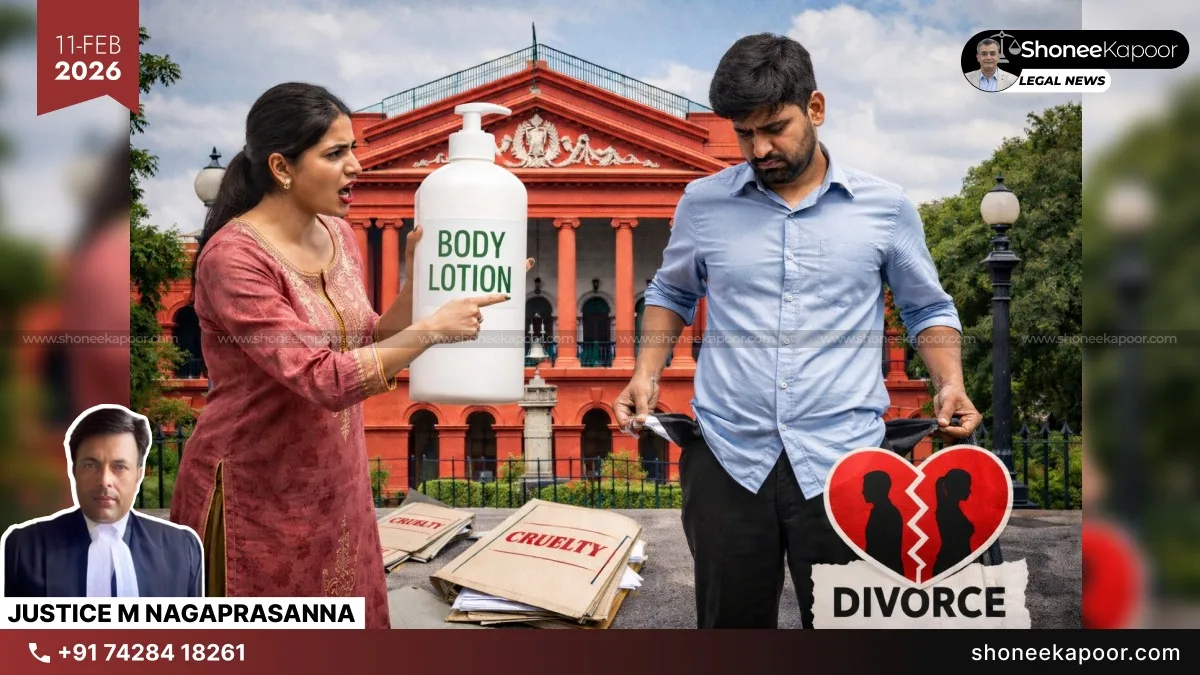
A Bengaluru wife filed a cruelty case after her husband allegedly refused to buy milk and body lotion for their child. The Karnataka High Court has stayed the investigation, questioning whether such marital disputes justify criminal prosecution.
BENGALURU: In a case that has raised serious questions about the criminalisation of ordinary marital disagreements, the Karnataka High Court stayed the investigation in a domestic dispute where a wife filed a cruelty complaint against her husband for not purchasing certain household items, including body lotion meant for their child.
The matter reached the High Court after the husband approached the court seeking to quash the FIR registered at Srirampura Police Station. According to court records, the wife had alleged cruelty and assault after her husband refused to bring some items she had asked for. Based on her complaint, the police registered a criminal case under provisions relating to cruelty and assault, and proceedings were also initiated before a Bengaluru magistrate court.
Challenging the criminal case, the husband filed a petition before the High Court, arguing that the allegations were minor, exaggerated, and did not meet the legal requirements necessary to initiate criminal prosecution. He maintained that the complaint was filed with mala fide intention and was an attempt to misuse the criminal justice system.
During the hearing before the bench of Justice M Nagaprasanna, the counsel appearing for the husband argued that the complaint was lodged only after the husband-initiated divorce proceedings. The defence submitted that the timing of the complaint clearly indicated retaliatory intent and raised doubts about its genuineness.
The husband further argued that the allegations mentioned in the complaint were vague and inconsistent. It was pointed out before the court that the accusations did not disclose any specific act that would legally amount to cruelty serious enough to attract criminal charges. The petition also stated that the witness statements recorded by the police were false and appeared to have been structured only to support the complaint without solid factual basis.
In his petition, the husband explained the background of the dispute. He stated that the disagreement began when his wife called him and asked him to bring milk and body lotion for the child. He said he refused, telling her that he did not want to spend money unnecessarily. According to him, this refusal alone led to the filing of a police complaint accusing him of domestic cruelty.
After hearing both sides, the Karnataka High Court passed an interim order staying the investigation and further proceedings in the case. The bench observed that the matter required detailed examination before allowing the criminal process to continue. As a result of the stay order, the police are presently restrained from proceeding with the investigation until the court takes a final decision on whether the FIR and related proceedings should be quashed.
Legal observers believe that this case reflects a growing trend where personal marital disagreements are increasingly converted into criminal cases. The judiciary, therefore, has an important responsibility to ensure that only those cases which satisfy the legal threshold for criminal liability are allowed to proceed. The interim protection granted by the High Court sends a clear message that not every domestic disagreement automatically becomes a criminal offence, and each case must be examined carefully on its own facts.
The matter is expected to be listed for further hearing in the coming weeks. The High Court will then decide whether the criminal proceedings should be permanently quashed or allowed to continue.
Explanatory Table of Laws and Sections Involved
| Law / Section | Full Name of Provision | What It Covers | Relevance in This Case | Legal Observation |
| Section 498A IPC | Cruelty by Husband or Relatives of Husband | Deals with cruelty, including harassment for dowry or conduct likely to drive a woman to suicide or cause grave injury | FIR registered alleging cruelty | Court will examine whether refusal to buy items meets the legal threshold of “cruelty” |
| Section 323 IPC (if included in FIR) | Punishment for Voluntarily Causing Hurt | Applies where physical hurt is caused | Allegation of assault mentioned in complaint | Requires specific medical or factual proof of injury |
| Section 504 IPC (if invoked) | Intentional Insult with Intent to Provoke Breach of Peace | Covers intentional insult leading to breach of peace | Often added in domestic complaints | Mere disagreement does not automatically satisfy ingredients |
| Section 506 IPC (if invoked) | Criminal Intimidation | Covers threats causing alarm | May be included in domestic FIRs | Requires clear and specific threat allegations |
| Section 482 CrPC | Inherent Powers of High Court | Empowers High Court to quash proceedings to prevent abuse of process of law | Husband filed petition under this section | Used when criminal process appears excessive or legally unsustainable |
| Provisions Relating to Cruelty and Assault | IPC-based offences | Criminal liability in domestic disputes | Basis for FIR registration | Court assessing whether allegations are specific and legally valid |
Key Takeaways
- Not every household disagreement amounts to “cruelty” under criminal law.
- Timing matters — filing an FIR after divorce proceedings raises serious questions about intent.
- Criminal provisions like 498A IPC cannot be invoked casually for minor domestic disputes.
- High Courts will intervene when the criminal process appears to be misused.
- Interim stay shows that courts are increasingly scrutinising exaggerated allegations before allowing prosecution to continue.
This Could Change Your Case-Get FREE Legal Advice-Click Here!
Disclaimer: The views and opinions expressed in this article are those of the Indian courts and do not necessarily reflect the official policy or position of “ShoneeKapoor.com” or its affiliates. This article is intended for informational and educational purposes only. The content provided is not legal advice, and viewers should not act upon this information without seeking professional counsel. Viewer discretion is advised.
