
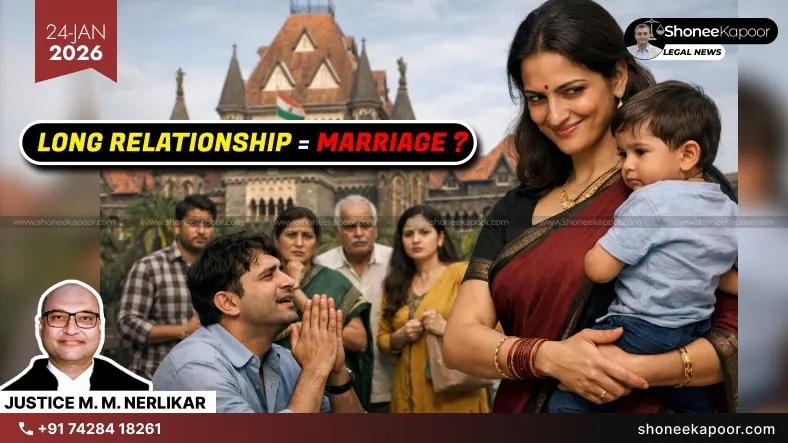
A live-in relationship with long cohabitation and birth of a child was held sufficient to attract DV Act proceedings against a man. However, the Court protected his parents and current wife, finding no allegations against them.
Nagpur: The Nagpur Bench of the Bombay High Court recently heard a petition seeking quashing of a Domestic Violence case filed under the Protection of Women from Domestic Violence Act, 2005. The accused challenged the Magistrate’s earlier orders and argued that there was no marriage and no genuine live-in relationship in the nature of marriage.
The man claimed that the woman had earlier filed a serious criminal case against him and that they never lived together in a shared household. According to him, casual meetings or a physical relationship cannot automatically become a domestic relationship under law.
The High Court examined the complaint and found that the woman had clearly stated that both were living like husband and wife and had a continuous relationship for a long period. The records showed that she became pregnant twice, the first pregnancy was allegedly terminated, and the second pregnancy resulted in the birth of a female child.
The court observed that these facts indicate continuity and seriousness of the relationship, which cannot be ignored at the preliminary stage.
The court relied on settled Supreme Court principles explaining how a relationship in the nature of marriage should be assessed. The judgment quoted:
“Duration of period of relationship- Section 2(f) of the DV Act has used the expression “at any point of time”, which means a reasonable period of time to maintain and continue a relationship which may vary from case to case, depending upon the fact situation.”
“Sexual relationship – Marriage-like relationship refers to sexual relationship, not just for pleasure, but for emotional and intimate relationship, for procreation of children, so as to give emotional support, companionship and also material affection, caring, etc.”
“Children – Having children is a strong indication of a relationship in the nature of marriage. The parties, therefore, intend to have a long-standing relationship. Sharing the responsibility for bringing up and supporting them is also a strong indication.”
Based on these principles, the High Court held that there was sufficient material to treat the relationship as falling within the scope of the Domestic Violence Act and that proper evidence must be examined during trial instead of quashing the case at the threshold.
At the same time, the Court granted relief to the other accused family members after noting that the complaint did not contain any specific or substantive allegations against them. Holding that their continuation in the case would amount to unnecessary legal harassment and misuse of process, the High Court quashed the proceedings insofar as they were concerned.
However, the case will continue against the main accused, against whom direct allegations and disputed facts require examination through trial.
The court also refused to stay its order, allowing the trial to proceed without delay.
This case once again shows how informal relationships can expose men to long legal battles involving maintenance claims and overlapping criminal proceedings even without marriage.
While the protection granted to innocent relatives is a positive step, men must clearly understand the serious legal risks attached to live-in relationships and the importance of legal awareness, documentation, and personal caution.
Explanatory Table – Laws & Sections Involved
| Law / Section | Simple Meaning | Relevance in This Case |
| Domestic Violence Act, 2005 | Protects women from abuse in household or marriage-like relationships. | Woman filed DV complaint claiming live-in relationship. |
| Section 12 – DV Act | Procedure to file DV case before Magistrate. | Case was initiated under this section. |
| Section 2(f) – DV Act | Defines “domestic relationship,” including live-in relationships. | Court examined whether relationship fits this definition. |
| IPC Section 376(2)(n) | Repeated sexual offence by same person. | FIR was earlier registered against the accused. |
| SC/ST Atrocities Act | Protects SC/ST victims from abuse and exploitation. | Added in the criminal FIR. |
| D. Velusamy Judgment (SC) | Sets test for marriage-like relationships. | Used to evaluate relationship status. |
| Indra Sarma Judgment (SC) | Says duration, bonding and children indicate marriage-like relationship. | Supported court’s reasoning. |
| Magistrate DV Proceedings | Trial court process under DV law. | Interim maintenance was granted earlier. |
Case Details
- Case Title: XYZ vs ABC, CWP No 209/2024
- Court: High Court of Judicature at Bombay, Nagpur Bench
- Judge: Hon’ble Justice M. M. Nerlikar
- Date of Judgment: 20 January 2026
- Neutral Citation: 2026:BHC-NAG:1174
- Counsels:
- For Petitioners: Mr. A.R. Fule, Advocate
- For Respondents: Mr. J.A. Anthony, Advocate
Key Takeaways
- Live-in relationships without legal clarity can expose men to long criminal and maintenance litigation, even without marriage.
- Pregnancy or birth of a child heavily tilts courts toward treating the relationship as marriage-like, limiting early relief for men.
- Quashing at the initial stage is difficult when facts are disputed; men often have to undergo full trial regardless of merits.
- Courts are willing to protect innocent family members if no specific allegations exist, which is a crucial safeguard against misuse.
- This case reinforces the need for men to understand legal risks of informal relationships and avoid assumptions of legal safety.
This Could Change Your Case-Get FREE Legal Advice-Click Here!
Disclaimer: The views and opinions expressed in this article are those of the Indian courts and do not necessarily reflect the official policy or position of “ShoneeKapoor.com” or its affiliates. This article is intended for informational and educational purposes only. The content provided is not legal advice, and viewers should not act upon this information without seeking professional counsel. Viewer discretion is advised.
