
Can a woman claim money from her first husband even after remarriage is proved in court? What happened when the second husband himself confirmed the truth and changed the entire case?
MUMBAI: A woman approached the Mumbai court seeking monetary relief from her estranged husband under the Domestic Violence Act, claiming that she was subjected to physical assault over dowry demands, was thrown out of her matrimonial home, and was left without financial support for herself and her child.
Additional Chief Judicial Magistrate B.N. Chikne of a Mumbai court later dismissed her application after it was clearly established during the trial that she had remarried after her divorce. The case took a dramatic turn when the former husband produced strong evidence, including witnesses and documents, to prove that she had a second marriage.
According to her complaint filed at the Bandra police station, she alleged that her husband had threatened her with divorce, abandoned her shortly after their arranged marriage, and started living with another woman in his native village. She further claimed that she was a housewife and that her husband failed to meet her and her child’s financial needs. Based on these allegations, she sought monetary relief under the law, and during the early stage of the case, the court had granted her interim maintenance.
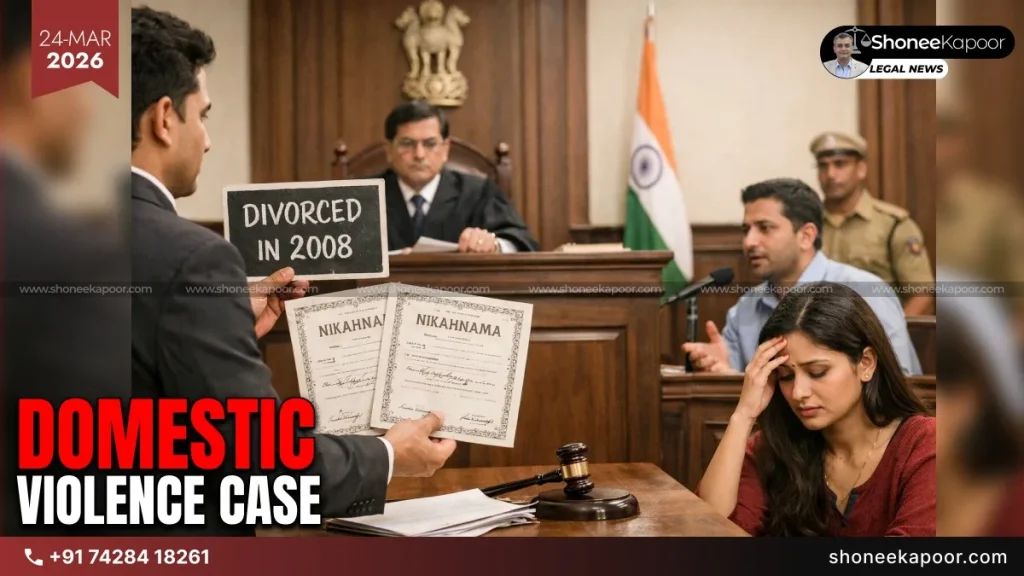
During the trial, the woman presented her sister as a witness, who stated that she had suffered trauma in the marriage. However, the husband opposed the claims and informed the court that the couple had already divorced in 2008 and that the woman had left the matrimonial home on her own, making the allegations of neglect baseless.
To support his defence, the husband stated that the woman had remarried after the divorce. He submitted a nikahnama as proof of the second marriage. He also brought the Imam who had performed the marriage, a handwriting expert to verify the authenticity of the document, and the woman’s second husband, who appeared before the court and confirmed the marriage.
After examining all the evidence, the court accepted that the woman had remarried. The court held that once remarriage is established, the woman is no longer entitled to seek monetary relief from her former husband under the Domestic Violence Act. On this basis, the court dismissed her application as not maintainable.
This case clearly shows that once remarriage is proved with proper evidence, claims for monetary relief against a former husband under the Domestic Violence Act cannot be sustained.
Explanatory Table: Laws & Sections Involved
| Law / Section | Purpose | How Applied in This Case |
| Protection of Women from Domestic Violence Act, 2005 (Section 12) | Allows an aggrieved woman to file a complaint seeking reliefs | Woman filed application seeking monetary relief against estranged husband |
| Section 20 (DV Act) | Provides for monetary relief including maintenance | Interim maintenance was initially granted to the woman |
| Section 2(a) – “Aggrieved Person” | Defines who can claim relief under the Act | Court held she ceased to be an aggrieved person after remarriage |
| Section 2(f) – “Domestic Relationship” | Requires existence of a domestic relationship for relief | Court found no subsisting domestic relationship after remarriage |
| Evidence Act (General Principles) | Governs admissibility and proof of documents and testimony | Nikahnama, Imam testimony, handwriting expert, and second husband’s statement accepted as proof |
Case Details
- Case Title: Wife vs Estranged Husband
- Court: Court of Additional Chief Judicial Magistrate, Mumbai
- Judge: Shri B.N. Chikne (ACJM)
- Case Type: Application under Protection of Women from Domestic Violence Act, 2005
- Police Station Involved: Bandra Police Station, Mumbai
- Interim Order: Maintenance granted initially
- Final Outcome: Application dismissed (Monetary relief denied)
Key Takeaways
- Remarriage completely breaks the legal basis to claim monetary relief from a former husband under the DV Act.
- Strong documentary evidence like nikahnama, along with witnesses and expert testimony, can completely dismantle such claims in court.
- Granting interim maintenance without verifying key facts like remarriage can lead to misuse and unjust burden on the respondent.
- Courts must ensure stricter scrutiny at the initial stage to prevent men from being dragged into long litigation based on incomplete or suppressed facts.
- Once remarriage is established, the law must consistently deny any financial claims against the former husband to prevent double benefit and legal exploitation.
This Could Change Your Case-Get FREE Legal Advice-Click Here!
Disclaimer: The views and opinions expressed in this article are those of the Indian courts and do not necessarily reflect the official policy or position of “ShoneeKapoor.com” or its affiliates. This article is intended for informational and educational purposes only. The content provided is not legal advice, and viewers should not act upon this information without seeking professional counsel. Viewer discretion is advised.