
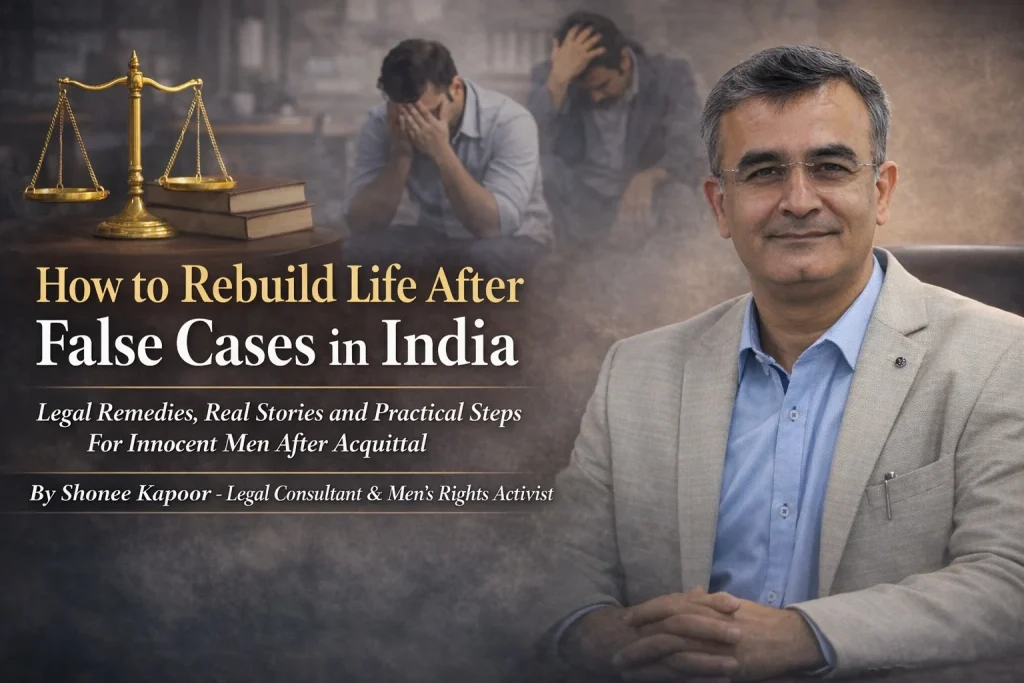
A false criminal case can destroy your reputation, career and mental peace even before the court gives its final decision. This detailed legal guide explains how to rebuild your life step by step after acquittal, based on real laws and real courtroom experience.
How to Rebuild Life After False Cases: Facing a false legal case – whether it’s a bogus 498A dowry FIR, false domestic violence complaint, or wrongful sexual allegation – is not just a legal battle. It shatters reputation, finances, relationships and mental equilibrium.
I have seen hundreds of men whose lives were fractured, sometimes catastrophically, by accusations that were legally unsustainable but socially devastating.
Here is a deep, honest, legally accurate guide to rebuilding your life after being falsely accused – based on real court precedents, true stories, statutory safeguards and practical strategy.
The Brutal Reality of False Cases in India
Indian protective laws — such as Section 498A IPC (dowry cruelty) and sexual assault laws are meant to protect victims. But misuse has emerged as a systemic problem in a significant number of instances. The Supreme Court and High Courts have repeatedly recognised that criminal law can be abused for personal vendetta or leverage in civil matters.
A glaring example: the well-known Nisha Sharma dowry case – where all accused were acquitted after nearly a decade because the court found the allegations were fabricated and unsupported.
Courts have also said that vague, general allegations cannot sustain 498A complaints, and quashed cases where accusations were clearly baseless.
There are real stories, even cases where men spent years in prison before acquittal, later proving the charges were false. These examples underline how destructive false litigation can be.
Immediate Steps After Acquittal or Quashing
When a false case collapses in court — whether through acquittal or quashing — the first actions determine how fast you can rebuild life.
a) Official Record Management
• Obtain certified copies of quashing/acquittal orders — these are your shield against future misuse.
• If FIRs remain registered despite quashing, move the High Court again for directions to remove records from police and court databases.
b) Counter-Claims Where Law Allows
Indian law recognises false evidence and false statements:
• IPC Section 182 — filing a false complaint or misleading the court is punishable.
• Defamation (Sections 499 & 500 IPC) can be invoked where reputation damage is established.
• Civil claims for damages (under CrPC Section 9 as understood in practice) can also be filed for financial loss due to prosecution.
These steps are not revenge — they are remedial tools to deter future misuse and restore dignity.
Rebuilding Reputation — Beyond the Courtroom
Bench decisions on quashing or acquittal are legal victories. But public perception often lags behind.
a) Documentation & Transparency
Create a verified chronology of events along with court orders. This becomes a reference for employers, banks, educational institutions and immigration authorities.
b) Legal Letters to Employers & Institutions
Use legal demand letters under certified notice to correct public records, employment histories, background checks, and online profiles that list you incorrectly as accused.
c) Engage Reputation Professionals
A qualified reputation management expert can help remove harmful online links and optimise positive information so that your authentic story appears first in Google results.
Psychological Rehabilitation — A Non-Negotiable Step
No legal victory alone heals trauma. False accusations are frequently designed to hurt emotions — and they succeed.
• Seek professional counselling to rebuild confidence and interpersonal trust.
• Join support communities of falsely accused individuals — this mitigates isolation.
• Reconnect with family through mediation where possible.
This is often the hardest phase — but without mental recovery, legal closure is hollow.
Financial Recovery & Career Rebuilding
False cases destroy careers and earning capacity, especially where arrests and media exposure happened.
a) Professional Licensing & Background Checks
Once cleared legally, prepare a reputation file for licensing bodies, industry regulators, academic institutions or professional boards.
b) Insurance & Compensation Claims
Though not widely used, you can explore loss claims from professional indemnity insurance or pursue civil damages where jurisdiction permits.
c) Strategic Relaunch
Sometimes a career pivot or reskilling strategy accelerates re-entry into the workforce. You have to rebound with intention.
Real Legal Precedents That Matter
Here are foundational judicial principles that support rebuilding:
- Vague Claims Can’t Sustain Criminal Liability
The Calcutta High Court quashed a 22-year-old conviction, observing that the allegations against family members were not provable and legally unsound.
- Supreme Court on Cruelty
The Supreme Court has emphasised that cruelty in 498A must be proven — mere discord or personal conflict doesn’t suffice.
- Courts Condemn Abuse of Legal Process
High Courts have explicitly called some FIRs “a gross misuse of law”, quashing them and protecting families from unnecessary litigation.
These principles are not academic — they are your legal foundation for both defence and rehabilitation.
How to Prevent Future Misuse
While rebuilding, you must also fortify against recurrence:
a) Anticipatory Bail — file before arrest when threats are credible.
b) Early Quashing Petitions — approach High Court promptly to nip bogus cases in the bud.
c) Evidence Preparedness — collate digital records, communications and witnesses before opposing parties start litigation.
This is not paranoia — this is strategic legal preparedness.
Closing Reality Check
Acquittal is a legal event. Rebuilding life is a systemic process.
A person’s reputation, emotional strength, career prospects and social standing deserve as much attention as the courtroom victory.
I have walked this path with many clients — from the lowest point of despair to restored dignity and purposeful living. A false case doesn’t have to define the rest of your life — but the actions you take after acquittal will define your resurgence.
Conclusion: From Victim to Validated Citizen
Rebuilding life after a false case in India is multifaceted:
- Secure legal closure
- Correct official records
- Restore public reputation
- Heal psychological wounds
- Rebuild career & finances
- Prevent future misuse
This is not theoretical advice — it is the framework I use with clients’ day in, day out.
If you or someone you care about is navigating this journey, the pathway is now mapped: strategic, lawful, intentional, irreversible.
FAQs
Collect certified copies of the judgment or quashing order, update official records, and formally inform employers or institutions to prevent continued reputational harm.
Yes. Depending on facts, remedies may include action under Section 182 IPC (false information), perjury proceedings, and criminal or civil defamation for reputational damage.
Not always. You may need to file additional applications to ensure proper closure and correction of records, especially for background verification purposes.
There is no fixed timeline. With proper documentation, legal clarity, and structured communication, recovery can begin immediately after legal closure, but social perception may take time to correct.
An acquittal legally clears you, but proactive reputation management and transparent documentation are essential to prevent long-term consequences from an already dismissed allegation.