
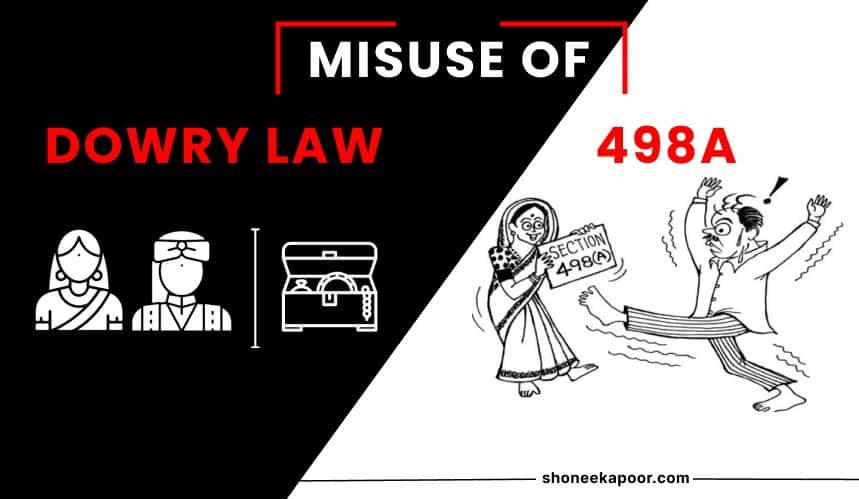
Section 498A (85 and 86 of The Bharatiya Nyaya Sanhita, 2023) of the Indian Penal Code was introduced in 1983 to protect married women from cruelty or harassment by their husbands or in-laws, especially in cases related to dowry demands.
This law allows a woman to file a complaint if she faces physical violence, mental torture, or pressure for money, gifts, or property after marriage. Once the complaint is made, the police can take action, which may include arresting the husband and his family members.
What Counts as ‘Cruelty’ Under Section 498A?
Under Section 498A IPC (85 and 86 of The Bharatiya Nyaya Sanhita, 2023), cruelty is not just about physical violence. It includes mental and emotional abuse too. If a woman is regularly insulted, threatened, or mentally tortured, it is considered cruelty. The law also covers pressure for dowry—asking her or her family for money, gifts, or property is illegal. Lastly, if the woman is pushed to the point of wanting to harm herself or ends up in deep mental distress, it also counts as cruelty under the law. The aim is to protect women from all forms of harassment within marriage.
How Section 498A Is Misused
Section 498A (85 and 86 of The Bharatiya Nyaya Sanhita, 2023) was made to protect women from cruelty in marriage. But today, it is often used wrongly in fights between husband and wife.
Fake Cases During Fights or Divorce Sometimes, women file false complaints to:
- Put pressure on the husband for money or alimony
- Trouble his family members who did nothing wrong
- Get an advantage in child custody or property matters
Blaming the Whole Family: It’s common to see the woman naming not just the husband, but also his parents, brothers, sisters, and even distant relatives in the complaint—even if they were not involved.
Arrest Without Checking the Truth: Since 498A (85 and 86 of The Bharatiya Nyaya Sanhita, 2023) is a serious offence, the police can arrest the husband and his family without doing any investigation first. This makes it easy to misuse the law and causes big problems for innocent people.
Punishment For Misuse of 498A: Even Before Guilt Is Proven
Under Section 498A IPC, a person can be jailed for up to 3 years, even if the complaint is false. The court also decides the fine, and there is no fixed limit, making it open to misuse.
Before the Arnesh Kumar judgment (2014), it was common for police to arrest the husband and his entire family immediately, without verifying the truth of the complaint. Even today, many officers still misuse this power, causing fear and panic among innocent families.
Once the case starts, the accused is dragged through years of court trials, facing mental stress, humiliation, and financial burden. Many lose their jobs, suffer public shame, and go through emotional breakdowns. Even if they are found innocent in the end, the damage is already done—to their reputation, career, family, and peace of mind.
This law, while made to protect women, is often used to punish innocent people—even before guilt is proven. That is not justice.
NCRB Data Exposes the Misuse of Section 498A
Government records from the National Crime Records Bureau (NCRB) reveal some important facts about how Section 498A (85 and 86 of The Bharatiya Nyaya Sanhita, 2023) is being used in India:
- More than 1.25 lakh people are arrested every year under 498A.
This includes not just the husband, but also his parents, sisters, brothers, and even far-off relatives—many of whom may have done nothing wrong. - Around 80–85% of people are found innocent in the end.
Most people who are charged under 498A are acquitted after years of fighting in court, which means the complaint couldn’t be proven. - The conviction rate under 498A is very low.
Compared to other serious criminal laws, very few people are actually punished under this section, which shows how often it is misused.
These facts show that while 498A (85 and 86 of The Bharatiya Nyaya Sanhita, 2023) was made to protect women from cruelty, it is often misused, and many innocent families suffer for no reason.
Important Court Rulings on False 498A Cases
Over the years, the Supreme Court of India has made significant observations regarding the misuse of Section 498A (85 and 86 of The Bharatiya Nyaya Sanhita, 2023) in numerous cases. Here are some key rulings:
- Sushil Kumar Sharma vs. Union of India (2005): The court said that 498A, which was meant to protect women, is often being used as a weapon by some wives to take revenge or harass their husbands and in-laws, rather than to seek justice.
- Preeti Gupta vs. State of Jharkhand (2010): In this case, the court pointed out that it’s common to see false or exaggerated complaints, where the actual facts are twisted to make the case look worse than it really is.
- Arnesh Kumar vs. State of Bihar (2014): This was a major ruling where the court told the police to stop arresting people immediately after a complaint under 498A. It stated that judges must carefully determine if an arrest is truly necessary, warning that misuse of this law amounts to “legal terrorism.”
These rulings clearly show that even the highest court is aware of the misuse of 498A and has taken steps to prevent innocent people from being unfairly punished.
How 498A Is Commonly Misused in Marital Disputes
The misuse of Section 498A (85 and 86 of The Bharatiya Nyaya Sanhita, 2023) often follows a similar pattern, especially when there are serious fights or problems in a marriage. Things usually begin to go wrong when the relationship breaks down, and the wife or her family starts demanding money, property, or a financial settlement to end the marriage. If the husband refuses to agree, a criminal case under Section 498A is filed, accusing him of cruelty and dowry harassment.
What makes this situation worse is that the complaint often includes not just the husband but also his parents, siblings, and even relatives who have no connection to the issue. This puts the entire family under pressure and fear. Once the complaint is filed, police action begins quickly, and officers may start threatening arrest or suggest settling the matter by paying money to avoid further trouble.
At this point, the husband has only two choices: either pay the demanded amount as a compromise, or face a long, stressful, and expensive legal battle to prove that he and his family are innocent. In many cases, even if the complaint is false, the damage to the family’s reputation, finances, and peace of mind is already done.
What to Do If You’re Falsely Accused Under Section 498A
Being falsely accused under Section 498A can be very stressful, but it’s important to stay strong and take the right steps. Here’s what you should do:
- Stay calm – don’t run away: It’s normal to feel scared, but do not panic or go into hiding. Running away can make things worse and may look like you’re guilty. Stay calm and face the situation legally.
- Hire a good criminal lawyer: Find an experienced lawyer who knows how to handle 498A and dowry-related cases. A good lawyer can guide you through bail, court proceedings, and your legal rights.
- Save all messages, emails, and proof: Start collecting evidence like chats, call logs, emails, CCTV footage, or witnesses. These can help prove your innocence and show the truth in court.
- File a counter-case if needed: If you’re being harassed or blackmailed, talk to your lawyer about filing a complaint back, such as for mental harassment, defamation, or extortion. You have legal rights too.
- Apply for anticipatory bail quickly: Don’t wait. File for anticipatory bail as soon as possible to protect yourself from arrest. This can give you time to prepare your case properly.
- Reach out to a support group or legal help organization: You are not alone. There are many support groups and NGOs that help men wrongly accused under 498A. They offer guidance, resources, and emotional support.
Conclusion
Section 498A was created to uphold dignity and protect women from cruelty. But when laws become tools of personal vengeance, they betray their very purpose.
India must take a bold, balanced approach—protect the victims, but punish the abusers of the law, too.