
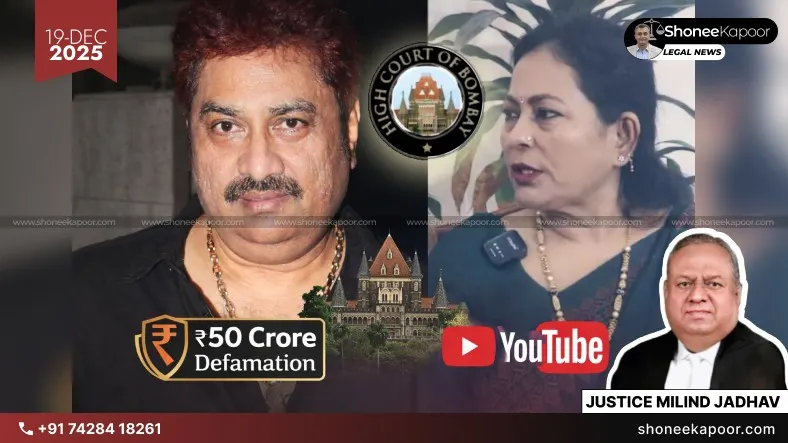
Singer Kumar Sanu has moved the Bombay High Court seeking ₹50 crore damages against his ex-wife for alleged defamatory interviews and social media content. He claims the statements harmed his reputation, career, and violated earlier divorce consent terms.
MAHARASHTRA: Bollywood playback singer Kumar Sanu, also known as Sanu Bhattacharjee, has filed a defamation case suit of ₹50 crore before the Bombay High Court against his former wife Rita Bhattacharya. The singer has alleged that her recent interviews and statements on social media have seriously damaged his personal reputation, professional standing, and public image built over decades.
In the suit, Kumar Sanu has sought both permanent and mandatory injunctions to stop his ex-wife, along with online platforms such as Google and Meta, from publishing, sharing, or circulating any content that he claims is defamatory in nature and harmful to him and his family.
The application seeking urgent interim reliefs is expected to be placed before Justice Milind Jadhav on December 24.
As per the plaint filed through advocate Sana Raees Khan, Kumar Sanu has stated that Rita Bhattacharya gave interviews in September 2025 to popular YouTube channels including Film Window, Viral Bhayani, and Siddharth Kannan. According to him, these interviews contained false, scandalous, and defamatory allegations relating to his behaviour during their marriage.
The suit further mentions that clips and short reels from these interviews were widely circulated on social media platforms and together received more than 1.5 million views. Kumar Sanu has claimed that the wide circulation of this content caused irreversible damage to his goodwill, reputation, and professional opportunities.
“The defamatory remarks have cast unwarranted aspersions on Sanu’s integrity and credibility, resulting in a tangible decline in professional inquiries and engagement opportunities”
-he claimed in his suit.
The singer has also stated that after legal notices were issued, some of the videos were either taken down or made private, which according to him supports his claim that the content was unlawful and defamatory.
Kumar Sanu has further alleged that the statements made by Rita Bhattacharya amount to a clear and intentional violation of the consent terms that were recorded during their matrimonial proceedings in the year 2001. Under these consent terms, both parties had agreed to withdraw all allegations against each other and had undertaken not to raise any claims or accusations in the future.
According to the plaint, the singer has asserted that his former wife revived old disputes and grievances after nearly 32 years of separation, despite having agreed to put all past issues to rest at the time of divorce.
“This conduct constitutes wilful and deliberate breach of consent terms entered at the time of divorce amounting to contempt of court and breach of contract”
-the plaint stated.
Kumar Sanu has broken down his total claim of ₹50 crore under different heads. He has sought ₹15 crore towards alleged actual commercial losses caused due to cancellation of professional assignments, reduction in appearance fees, and suspension of endorsement deals.
An additional ₹10 crore has been claimed for damage to his professional reputation and goodwill. He has also sought ₹15 crore as compensation for mental agony, humiliation, and emotional distress. Further, ₹10 crore has been claimed as exemplary and punitive damages “to deter similar campaigns”.
The plaint also highlights that after the circulation of the alleged defamatory content, there was a visible decline in professional inquiries and offers, along with a sharp rise in abusive and derogatory comments against the singer on social media platforms.
Kumar Sanu has also relied on a previous order of the Delhi High Court which recognised and protected his personality and publicity rights. He has argued that the statements made by his ex-wife further violate these legally recognised rights.
Apart from monetary damages, the singer has requested the court to direct Rita Bhattacharya to submit a written apology before the court and to publish the same in newspapers. He has also sought comprehensive directions against social media platforms and unidentified entities, referred to as “John Doe” parties, to remove all existing defamatory content and prevent any future uploads or circulation of the same material.
Explanatory Table: Laws & Legal Principles Involved In The Case
| Law / Legal Principle | Section / Concept | Simple Explanation |
| Law of Defamation | Civil Defamation | Defamation refers to making false statements that harm a person’s reputation, goodwill, or standing in society. Kumar Sanu alleges that interviews and online content damaged his reputation and career. |
| Injunction (Civil Law) | Permanent & Mandatory Injunction | A permanent injunction permanently restrains a person from doing an act, while a mandatory injunction directs a person to undo a harmful act, such as removing defamatory content. |
| Consent Terms in Matrimonial Proceedings | Binding Agreement (2001 Divorce Settlement) | Consent terms recorded by a court are legally binding. Both parties agreed not to make allegations against each other after divorce. Violation of these terms can attract legal consequences. |
| Contempt of Court | Civil Contempt | Disobeying or acting against court-recorded consent terms may amount to contempt of court as it undermines judicial authority. |
| Breach of Contract | Contract Law Principle | When a party violates agreed terms of a settlement, it can amount to breach of contract, allowing the affected party to claim damages. |
| Personality & Publicity Rights | Recognised by Courts | These rights protect a public figure’s name, image, reputation, and commercial value from misuse or unauthorised exploitation. |
| Takedown Obligations of Online Platforms | Intermediary Liability | Social media platforms can be directed by courts to remove unlawful or defamatory content hosted on their platforms. |
| Exemplary and Punitive Damages | Civil Damages | Such damages are awarded not just to compensate the victim but also to deter similar wrongful acts in the future. |
Case Summary
| Particulars | Details |
| Case Title | Sanu Bhattacharjee @ Kumar Sanu v. Rita Bhattacharya & Anr. |
| Court | Bombay High Court |
| Bench | Justice Milind Jadhav |
| Nature of Case | Civil Defamation Suit |
| Claim Amount | ₹50 Crore |
| Plaintiff | Kumar Sanu (Sanu Bhattacharjee) |
| Defendant | Rita Bhattacharya & Others (including online platforms) |
| Advocate for Plaintiff | Sana Raees Khan |
| Reliefs Sought | Permanent injunction, mandatory injunction, damages, apology, takedown of content |
| Listing Date | December 24 |
| Neutral Citation | Not available / Not mentioned |
| Platforms Named | Google, Meta, YouTube and unknown entities (“John Doe”) |
Damages Claim Breakdown
| Head of Claim | Amount |
| Commercial and Professional Losses | ₹15 Crore |
| Loss of Reputation and Goodwill | ₹10 Crore |
| Mental Agony and Humiliation | ₹15 Crore |
| Exemplary and Punitive Damages | ₹10 Crore |
Key Takeaways
- Divorce settlements and consent terms are not decorative papers; violating them years later to run media narratives is a legal breach, not free speech.
- False or exaggerated allegations by an ex-spouse can destroy a man’s reputation, career, and mental health, and courts are increasingly recognising this harm.
- Men also have enforceable personality and publicity rights, and no one gets a lifetime license to malign a man because he is a public figure.
- Social media trials and YouTube interviews are becoming tools of harassment against men, forcing courts to step in with takedown orders and injunctions.
- This case reinforces a hard truth men already know: legal accountability must apply equally, or reputational abuse against men will continue unchecked.
This Could Change Your Case-Get FREE Legal Advice-Click Here!
Disclaimer: The views and opinions expressed in this article are those of the Indian courts and do not necessarily reflect the official policy or position of “ShoneeKapoor.com” or its affiliates. This article is intended for informational and educational purposes only. The content provided is not legal advice, and viewers should not act upon this information without seeking professional counsel. Viewer discretion is advised.