
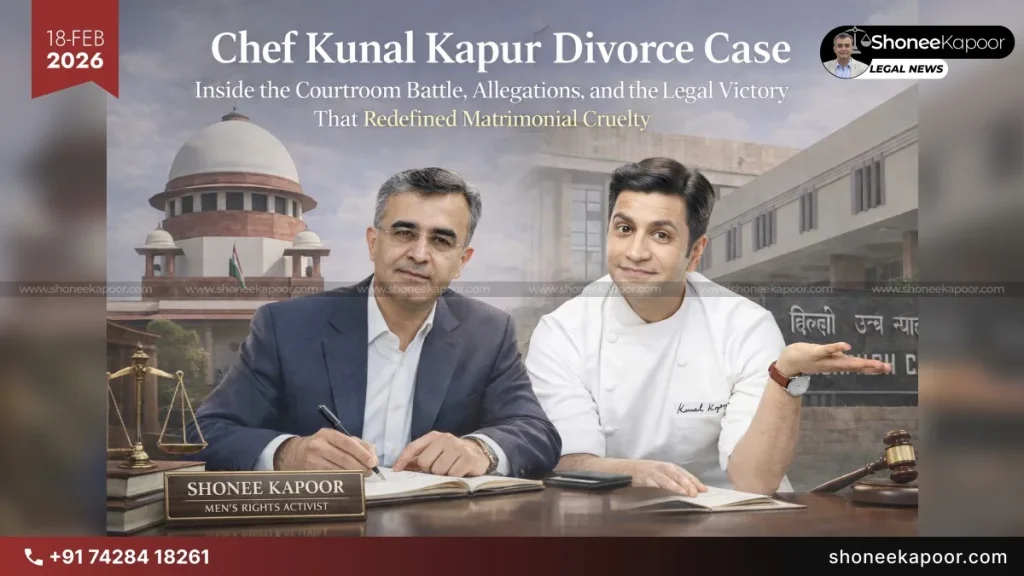
Celebrity chef Kunal Kapur fought a long and intense courtroom battle to prove mental cruelty.
The Delhi High Court’s decision reveals what really happens inside matrimonial litigation and why legal strategy makes all the difference.
Chef Kunal Kapur Divorce: When matrimonial disputes enter the courtroom, fame offers no protection. The divorce battle involving Chef Kunal Kapur became a reminder that even public figures can face prolonged matrimonial litigation and that structured legal strategy can decisively alter outcomes.
This is not celebrity gossip. It is a case study in how courts assess cruelty, evidence, and matrimonial breakdown and how professional legal intervention determines results.
Background: Marriage and Breakdown
Chef Kunal Kapur married in 2008. Over time, matrimonial discord escalated into sustained litigation. What began as personal differences transformed into a contested legal battle involving allegations of mental cruelty.
The Core Allegations in Court
During proceedings, the husband alleged sustained mental cruelty. The court examined:
- Repeated humiliation and disrespect.
- Conduct affecting professional reputation.
- Threats and hostile behaviour.
- Breakdown of marital trust beyond repair.
It is critical to understand: courts do not grant divorce merely because a marriage fails. The legal threshold is proof of cruelty — mental or physical — supported by evidence and consistent pleadings.
Trial Court Phase: The Initial Setback
Like many husbands, the initial proceedings did not immediately translate into relief. Matrimonial litigation often becomes prolonged due to:
- Evidentiary scrutiny.
- Counter-allegations.
- Mediation attempts.
- Procedural delays.
High-profile status did not accelerate the process. The burden remained on the husband to prove cruelty.
This is where many men lose momentum — emotionally and legally.
High Court Analysis: What Changed the Outcome
The High Court undertook a structured legal analysis. It observed that:
- Sustained conduct causing mental agony qualifies as cruelty.
- Public humiliation and consistent hostility cannot be trivialised.
- Marriage cannot be forced where the relationship is emotionally dead.
- Courts must consider cumulative impact, not isolated incidents.
The judgment recognised that mental cruelty is not limited to physical violence. Repeated conduct that destroys dignity and peace of mind is legally actionable.
Ultimately, divorce was granted.
This was not sympathy. It was structured legal reasoning.
Why This Case Matters Beyond Celebrity Status
The significance lies in three broader realities:
- Men Also Face Mental Cruelty
The legal system has historically been perceived as wife-centric in matrimonial disputes. This judgment reinforced that cruelty is gender-neutral in principle.
- 2. Evidence and Strategy Decide Outcomes
High Court success came from meticulous documentation, structured pleadings, and consistent argumentation. Emotional outrage alone does not win cases — legal architecture does.
- 3. Reputation Does Not Shield You
If a nationally recognised chef can endure prolonged litigation, imagine the plight of ordinary men without resources or visibility.
Legal Lessons for Men Facing Matrimonial Litigation
If you analyse the case structurally, several strategic takeaways emerge:
- Document patterns of conduct.
- Avoid reactive behaviour.
- Maintain financial and digital records.
- Seek early professional legal guidance.
- Frame the case legally — not emotionally.
Matrimonial litigation is not a moral debate. It is a procedural contest governed by evidence and statutory interpretation.
The Larger Question: Are We Recognising Male Victimhood in Matrimonial Law?
The case underscores a systemic issue: men often hesitate to assert mental cruelty claims due to social stigma. Courts, however, have increasingly acknowledged that:
- Mental harassment is real.
- False narratives can damage professional careers.
- Irretrievable breakdown, though not formally codified, influences judicial reasoning.
The victory was not about gender dominance. It was about legal clarity.
Professional Legal Intervention: The Deciding Factor
Outcomes in matrimonial cases are rarely accidental. They depend on:
- Correct legal framing under statutory provisions.
- Precision in pleadings.
- Cross-examination strategy.
- Appellate persistence.
- Understanding judicial precedent on cruelty.
When handled professionally, even prolonged disputes can conclude decisively.
Without structured legal assistance, many men surrender prematurely.
Conclusion: Justice Requires Structure, Not Sympathy
The divorce judgment in favour of Chef Kunal Kapur is a reminder that:
- The law can recognise cruelty against husbands.
- Courts are willing to intervene where evidence supports the claim.
- Strategic litigation can reverse years of matrimonial distress.
Celebrity or common man — the principle remains the same.
Know your rights. Build your case. Litigate strategically.
FAQs
Chef Kunal Kapur was married to Ekta Kapur. Their marriage later became the subject of prolonged matrimonial litigation, which ultimately reached the Delhi High Court.
The Delhi High Court held that the conduct placed on record amounted to mental cruelty under matrimonial law. The Court examined the cumulative effect of behaviour and concluded that continuation of marriage was not legally sustainable.
Yes. Mental cruelty is a recognised ground under the Hindu Marriage Act. It is not restricted to physical violence and can be invoked by husbands if sustained emotional harassment or humiliation is proven through evidence.
No. Courts decide cases based on pleadings, evidence, and legal principles. Public image or fame does not reduce the burden of proof in matrimonial disputes.
Documentation, consistency in allegations, and professional legal strategy are critical. Matrimonial cases are won on evidence and structured arguments — not on public sympathy.